Tomato sauce is one of the most versatile staples in any kitchen. Whether you’re preparing a quick weeknight pasta, layering lasagna, or making a pizza base, a good sauce can elevate the entire dish. Using diced tomatoes as your foundation is both convenient and reliable—they’re affordable, shelf-stable, and deliver consistent flavor year-round.
In this guide, you’ll discover three different methods to transform diced tomatoes into delicious sauces – a simple stovetop version for speed, a slow-cooked option for depth, and a quick blended method for smoothness. Each approach has its own strengths, so you can choose based on your time, taste, and the dish you’re making.
Process of Preparing Tomato Sauce From Diced Tomatoes
Table of Contents
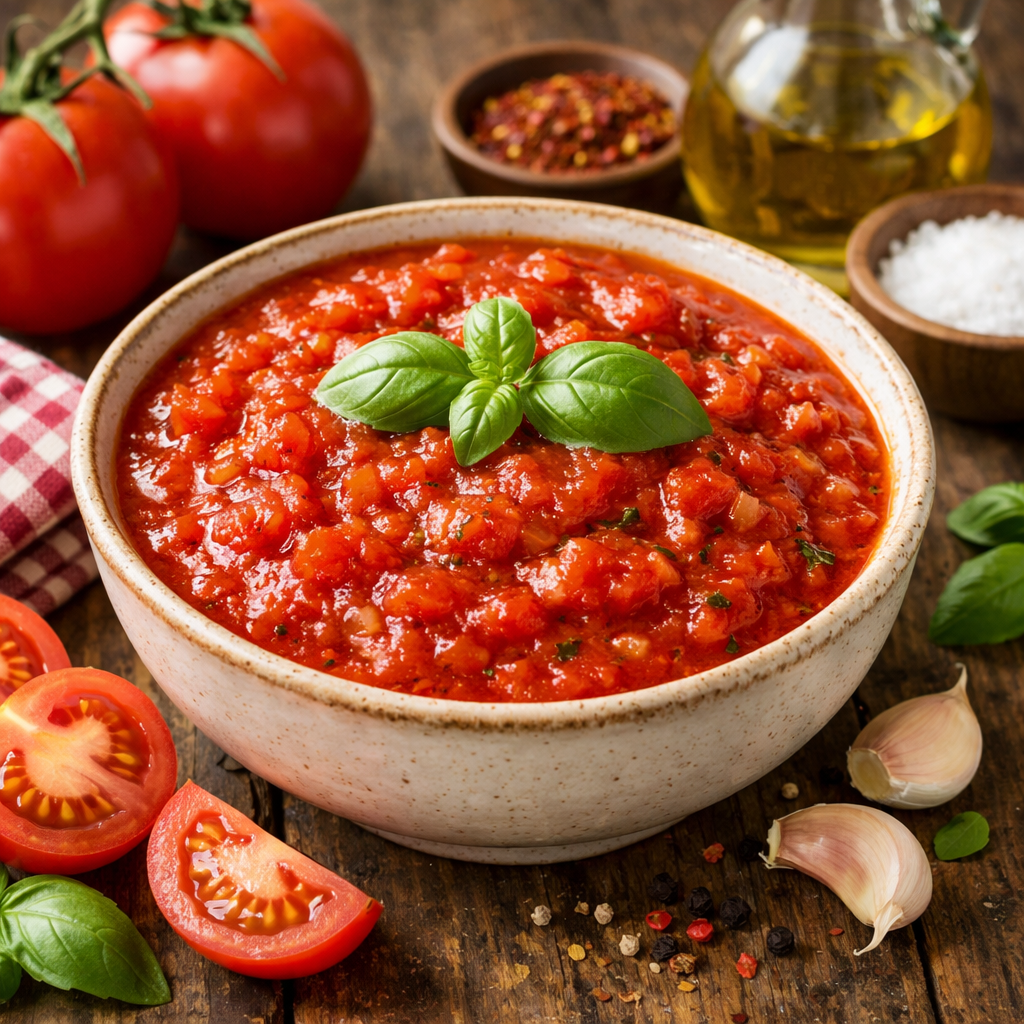
Not all tomato sauces are created the same—sometimes you need speed, other times you crave depth, and occasionally you want silky smoothness without the wait. The beauty of starting with diced tomatoes is that they adapt to whichever cooking style you choose.
Here are three distinct methods, each tailored to different needs: a simple stovetop sauce for quick meals, a slow-cooked version for rich flavor, and a quick blended sauce for ultra-smooth results.
1. Simple Stovetop Tomato Sauce
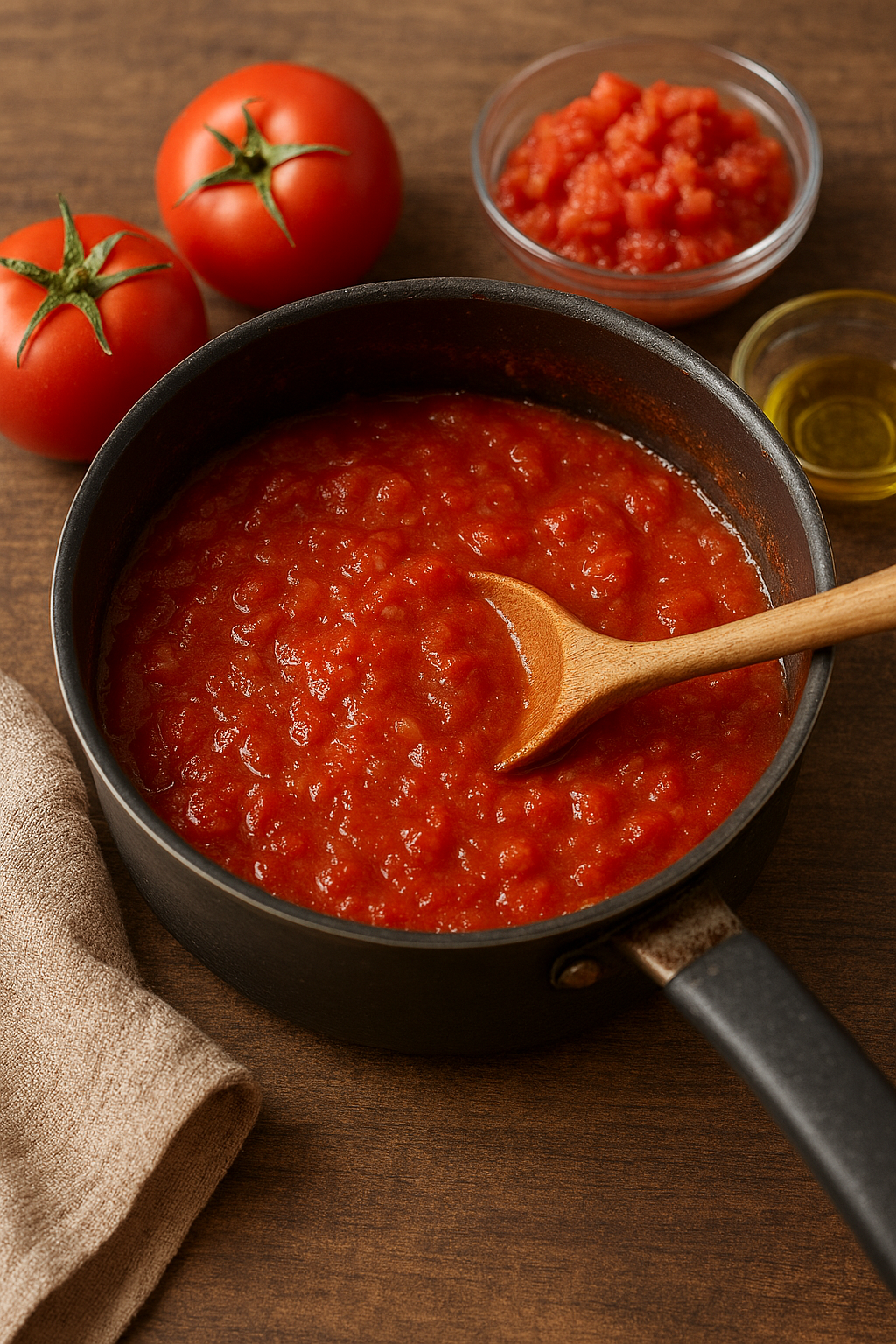
This is the most straightforward ways to transform diced tomatoes into a flavorful sauce. It’s quick, requires minimal ingredients, and is perfect for busy weeknights when you want something homemade without fuss.
- Heat olive oil – Warm 2–3 tablespoons of olive oil in a medium pan over medium heat. This creates a rich base for the sauce.
- Sauté aromatics – Add finely chopped onions and minced garlic. Cook until translucent and fragrant, about 5 minutes, to build depth of flavor.
- Add tomatoes – Pour in canned diced tomatoes with their juices. The liquid ensures the sauce stays moist and develops a rich consistency.
- Season generously – Sprinkle in salt, black pepper, and classic Italian herbs like basil, oregano, or parsley. Adjust to taste.
- Simmer gently – Let the sauce bubble on low heat for 20–30 minutes, stirring occasionally. This melds the flavors and thickens the sauce.
- Adjust texture – Use an immersion blender for a smooth finish, or leave it chunky for a rustic, homemade feel.
- Best For – Quick pasta dinners, bruschetta topping, or a base for meatballs.
2. Slow-Cooked Tomato Sauce
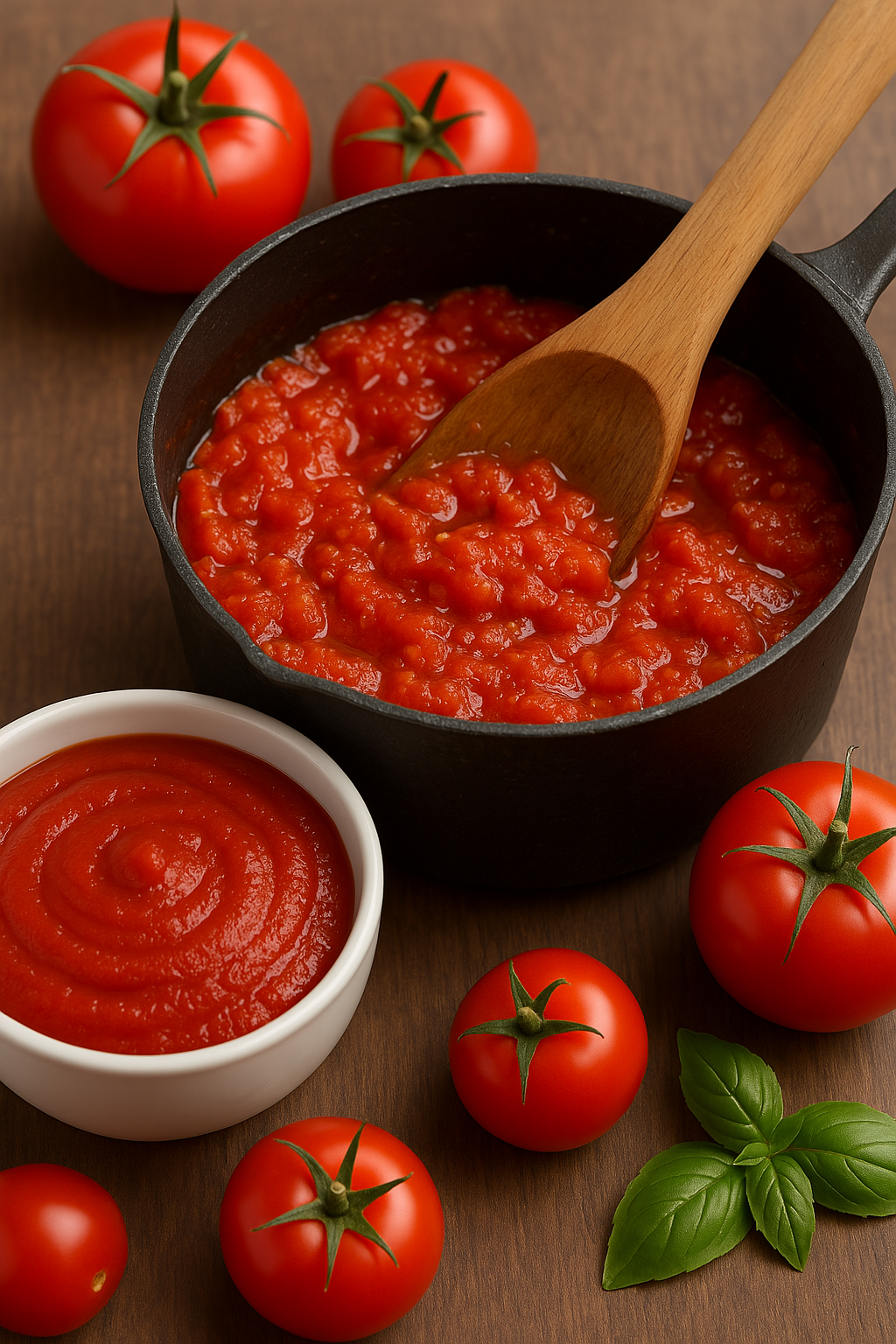
Slow cooking allows flavors to deepen and harmonize, producing a rich, hearty sauce. This method is ideal for lasagna, baked pasta dishes, or when you want a sauce that tastes like it’s been simmering all day.
- Build the base – Heat olive oil in a large pot. Add onions, garlic, and diced carrots. Carrots add natural sweetness to balance acidity.
- Add tomatoes and paste – Stir in diced tomatoes and a spoonful of tomato paste for concentrated flavor.
- Enhance with liquid – Pour in a splash of red wine or vegetable/chicken broth. This adds richness and complexity.
- Season deeply – Add bay leaves, thyme, and a pinch of sugar. These balance acidity and infuse earthy undertones.
- Simmer low and slow – Cover and cook on low heat for 1–2 hours, stirring occasionally. The longer it cooks, the richer the flavor.
- Finish and refine – Remove bay leaves. Blend for a velvety texture or leave it chunky for a rustic feel.
- Best For – Lasagna, baked ziti, or as a base for braised meats.
3. Quick Blended Tomato Sauce
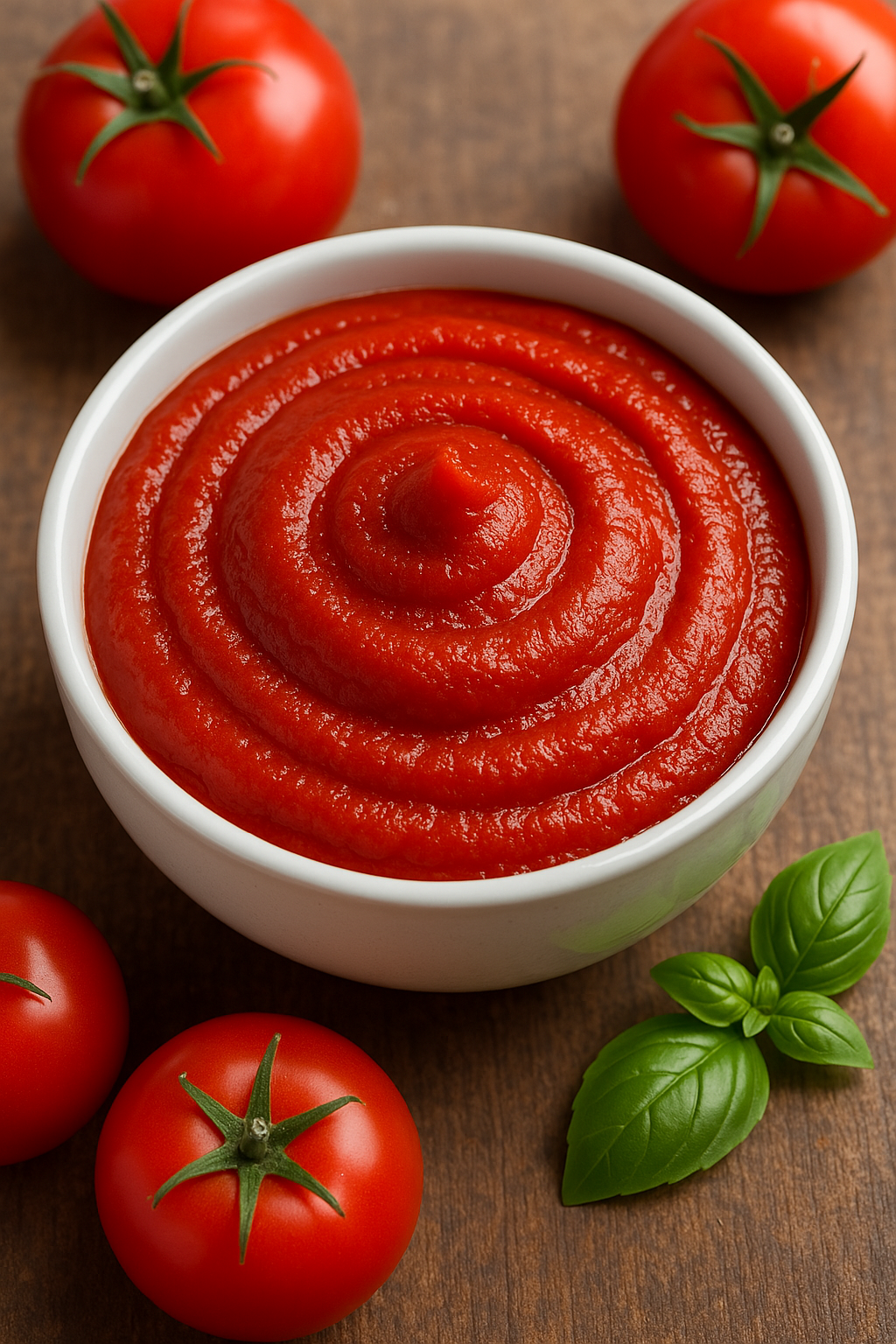
This method is perfect when you want a smooth sauce in minutes. Blending diced tomatoes upfront saves cooking time while still delivering bold flavor.
- Blend ingredients – Place diced tomatoes, garlic, olive oil, and herbs (like basil or oregano) in a blender. Blend until smooth.
- Cook briefly – Pour the puree into a saucepan and simmer for 15–20 minutes. This reduces excess liquid and intensifies flavor.
- Season to taste – Add salt, pepper, and a pinch of sugar if needed. Adjust herbs for freshness.
- Use immediately – Ideal for pizza bases, quick pasta dishes, or dipping sauces. Can also be stored in the fridge for 3–4 days.
- Best For – Pizza night, quick spaghetti, or as a base for creamy tomato soups.
Benefits of Making Tomato Sauce from Diced Tomatoes
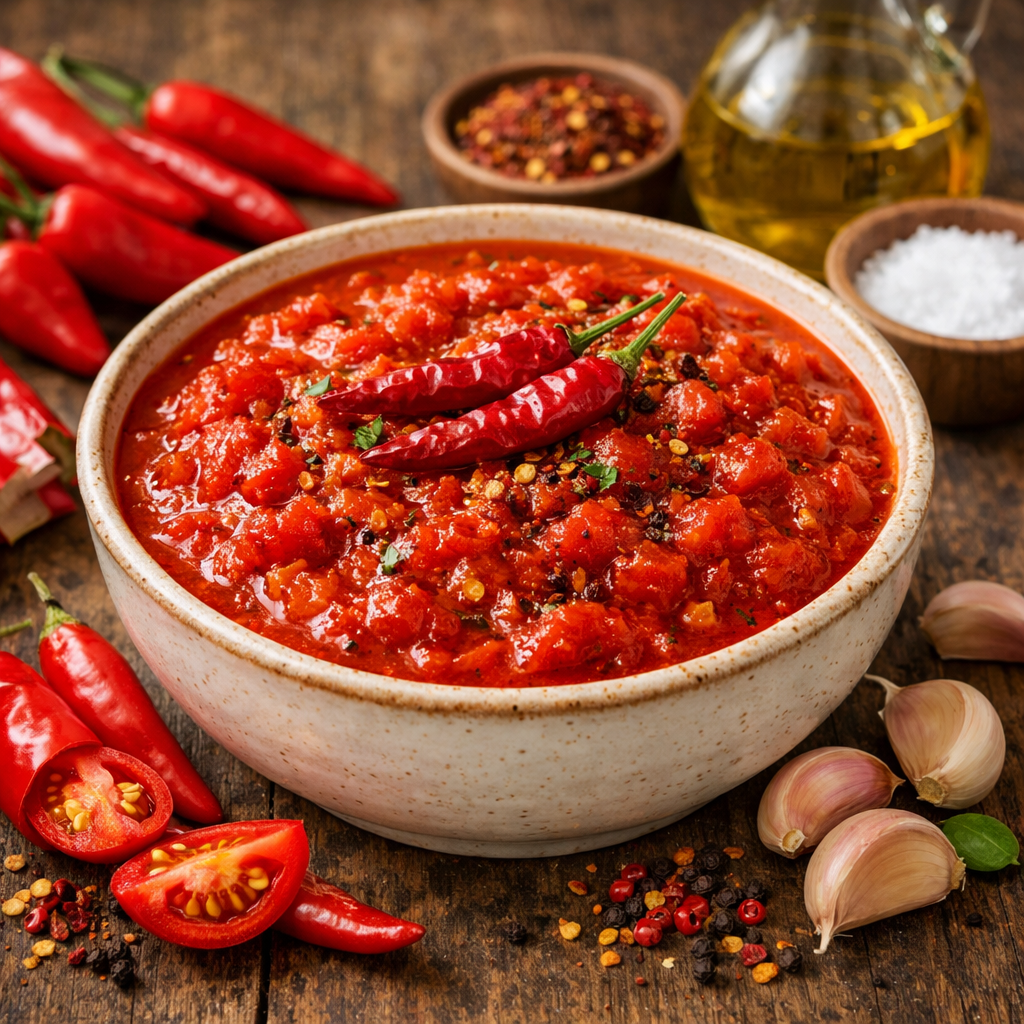
Beyond convenience, using diced tomatoes for sauce offers practical advantages that make it a smart choice for home cooks.
- Extended Shelf Life – Canned diced tomatoes last months, ensuring you always have a reliable base ingredient.
- Convenience – No peeling, chopping, or deseeding—just open the can and cook.
- Versatility – Works across cuisines—Italian pasta, Indian curries, Mexican stews, or Mediterranean soups.
- Customizable Flavor –Easily adapt with herbs, spices, wine, cream, or chili flakes to suit your dish.
- Budget-Friendly – More affordable than fresh tomatoes, especially off-season.
- Consistent Quality – Unlike fresh tomatoes, canned versions deliver uniform taste and texture year-round.
- Time-Saving – Cuts prep time significantly, making homemade sauce achievable even on busy days.
Wrapping Up
Making tomato sauce from diced tomatoes is simple, flexible, and rewarding. Whether you choose the quick stovetop method, the slow-cooked version for depth, or the blended approach for smoothness, you’ll end up with a flavorful sauce that elevates any dish.
With just a few pantry staples, you can create a homemade sauce that’s far superior to store-bought jars. It’s a skill every home cook should master—delicious, economical, and endlessly adaptable.
Leave a Reply