Tomatoes are a cornerstone of countless dishes, yet slicing them neatly is one of those deceptively tricky kitchen skills. Their slippery skin and delicate flesh often resist a clean cut, leaving you with squashed slices or uneven chunks. But with the right approach, you can transform this everyday task into a simple, satisfying ritual.
Here we will discuss everything—choosing the right tomato, selecting the best tools, and mastering slicing techniques— so you understand not just how to slice, but why each step matters.
Choosing the Right Tomato
Table of Contents
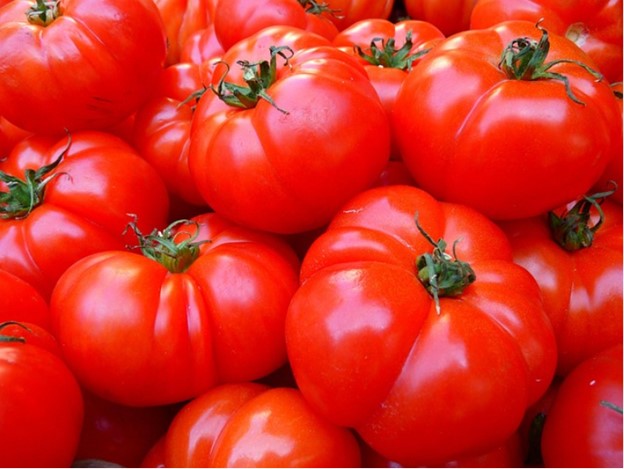
Before you even pick up a knife, pause to consider the tomato itself. Different varieties have different textures, juiciness, and sizes, which means the slicing technique should adapt accordingly.
Roma/Plum Tomatoes: Firm and less juicy, making them ideal for sauces and uniform slices.
Beefsteak Tomatoes: Large and juicy, perfect for sandwiches and burgers.
Cherry/Grape Tomatoes: Small and sweet, usually halved rather than sliced.
Heirloom Tomatoes: Irregular in shape but bursting with flavor—handle gently to preserve their beauty.
Tools You’ll Need
A tomato is only as easy to slice as the tools you use. Think of this as setting up your workspace before the artistry begins.
Sharp Serrated Knife: Essential for gripping and cutting through the skin without crushing.
Cutting Board: A stable surface prevents slipping and ensures safety.
Optional Tools: Tomato slicers or mandolines for uniform slices, though they require caution.
Boxes: For storing diced tomatoes
Step-by-Step Slicing Method
Each method below begins with a short introduction to explain why it matters, followed by the practical steps.
1. Wash and Dry
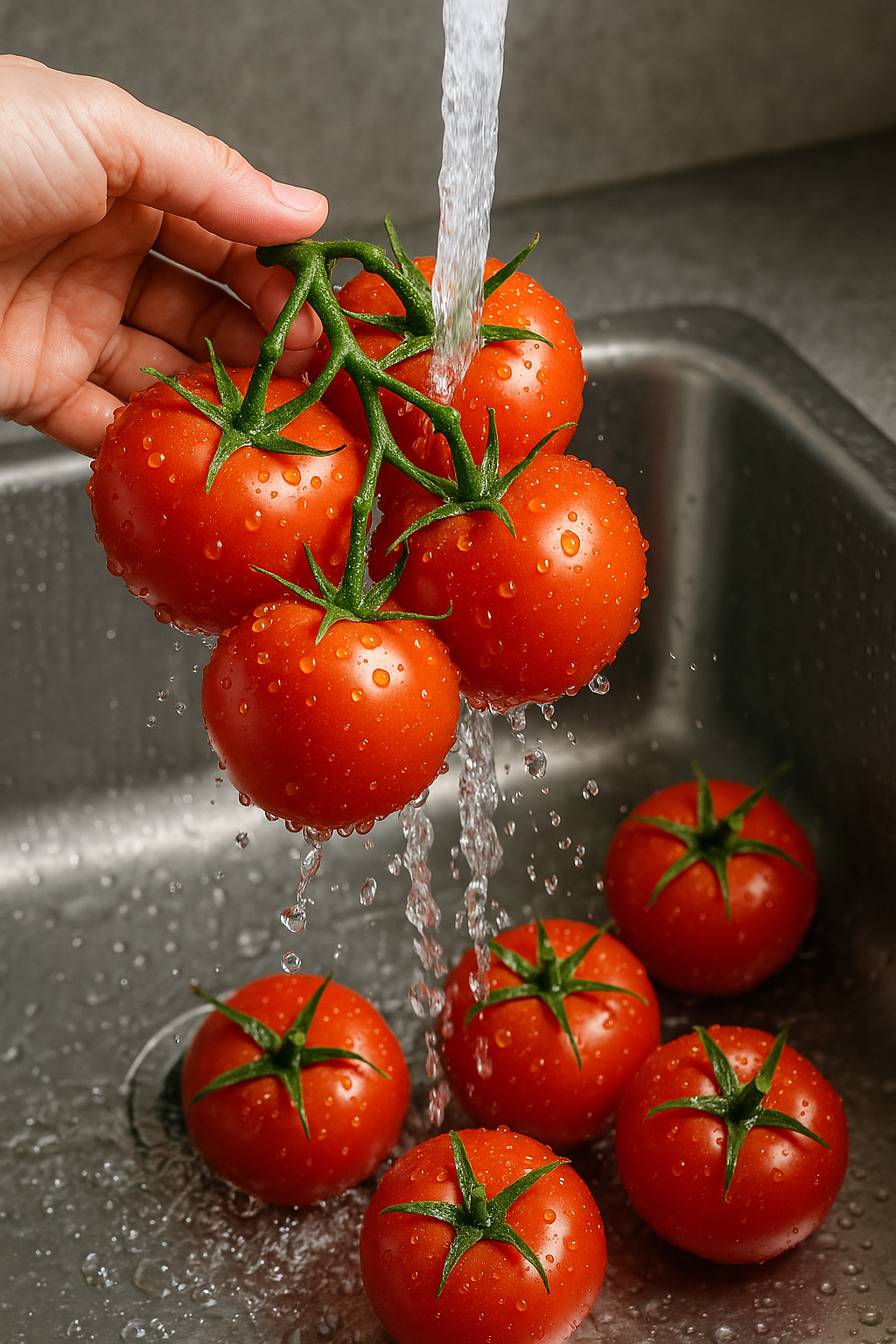
Cleanliness and safety come first. A slippery tomato is harder to control, and excess moisture can make slicing messy.
Steps:
Rinse under cool water.
Pat dry with a clean towel.
Ensure the tomato feels firm and dry before cutting.
2. Remove the Core
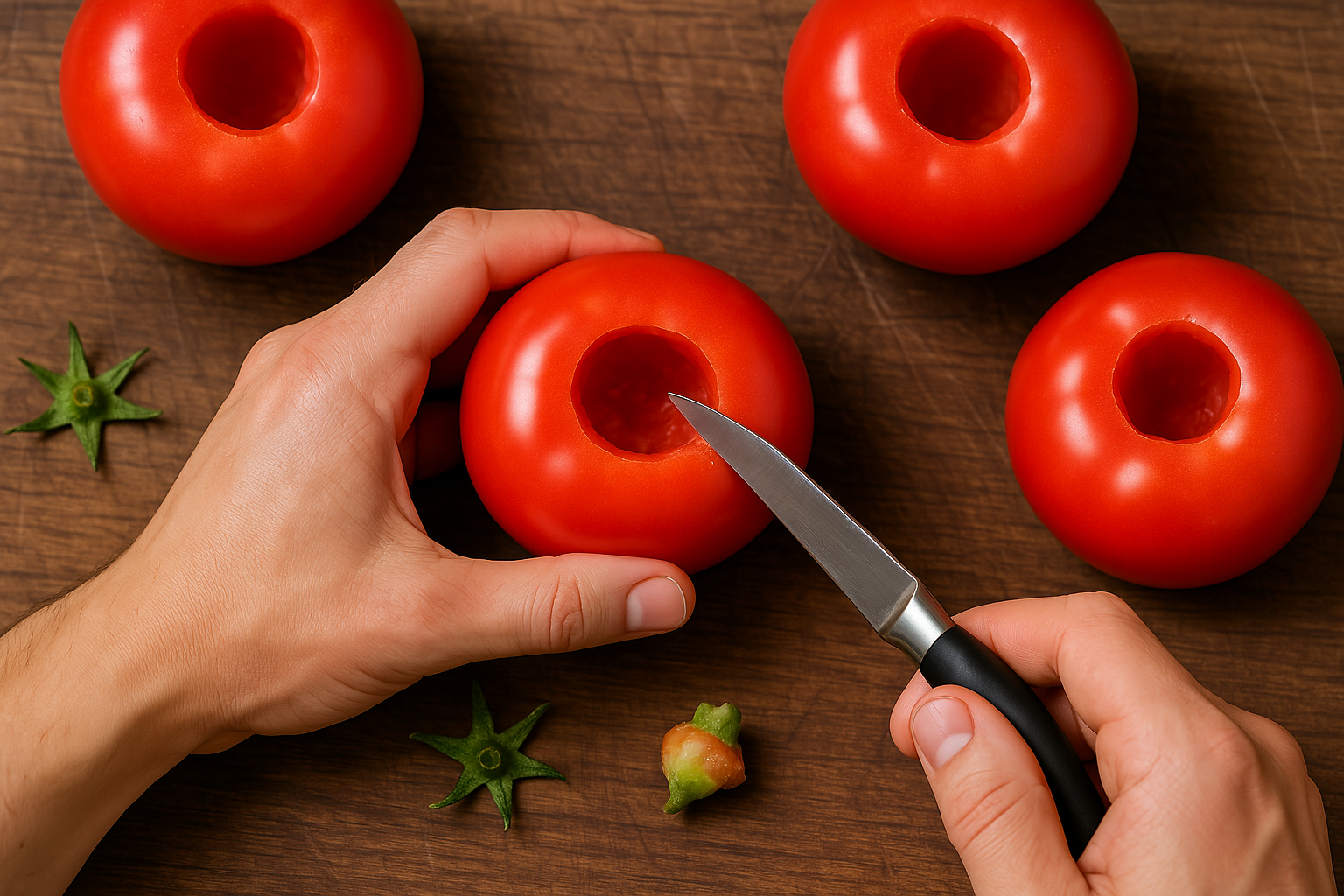
The stem area is tough and fibrous, which can ruin the texture of your slices. Removing it ensures every bite is tender and enjoyable.
Steps:
Use the knife tip to cut around the stem.
Lift out the core gently.
Discard or save for stock.
3. Stabilize the Tomato
A rolling tomato is a dangerous tomato. Creating a stable base prevents accidents and ensures even slices.
Steps:
Place stem-side down on the cutting board.
If the tomato is irregular, trim a small slice off the bottom to create stability.
4. Slice with a Gentle Sawing Motion
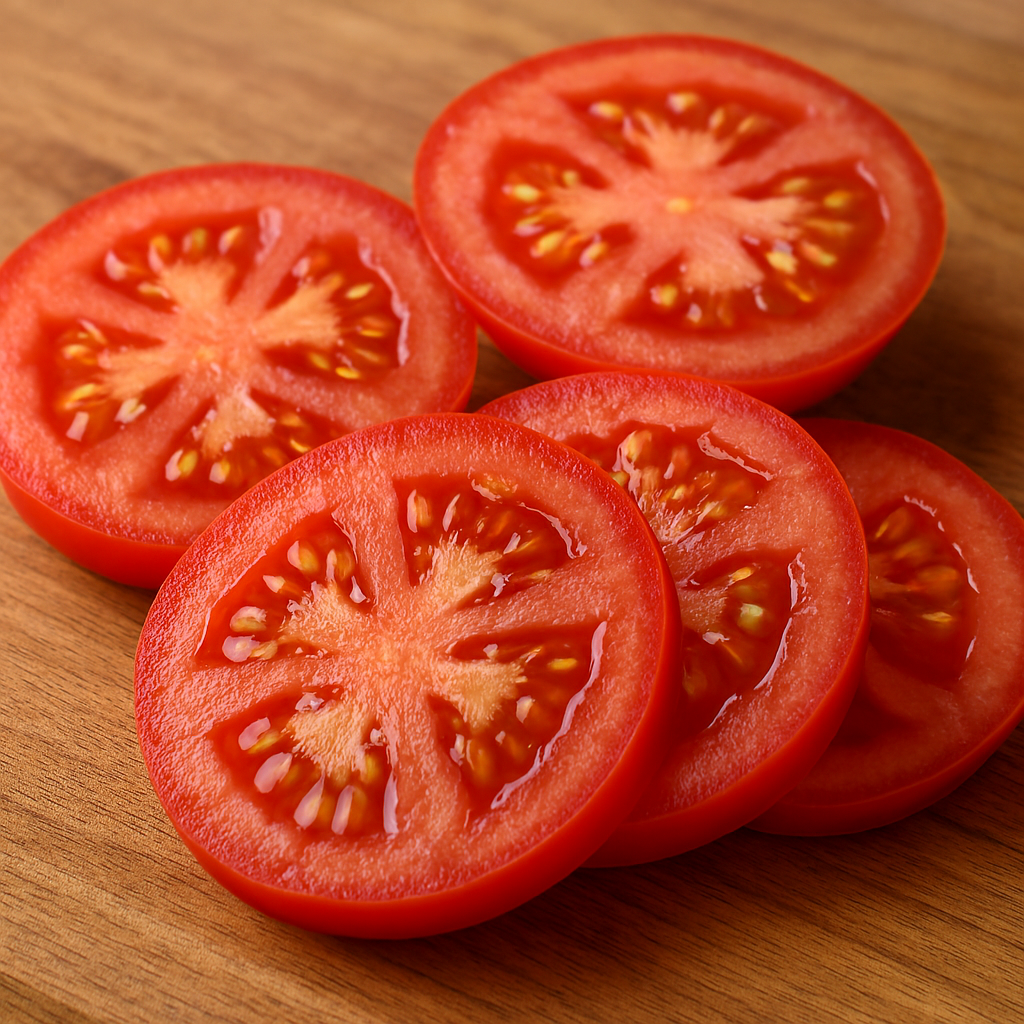
The secret to clean slices is finesse, not force. Pressing down crushes the tomato, while sawing lightly preserves its shape.
Hold the tomato firmly but gently.
Use a serrated knife.
Saw back and forth with minimal pressure.
5. Adjust Thickness
Thickness determines how the tomato behaves in your dish. Thin slices add elegance, medium slices balance texture, and thick slices hold up to grilling.
Steps:
Thin slices (⅛ inch): Best for salads or garnishes.
Medium slices (¼ inch): Perfect for sandwiches.
Thick slices (½ inch): Ideal for grilling or burgers.
Special Techniques of Slicing Tomatoes
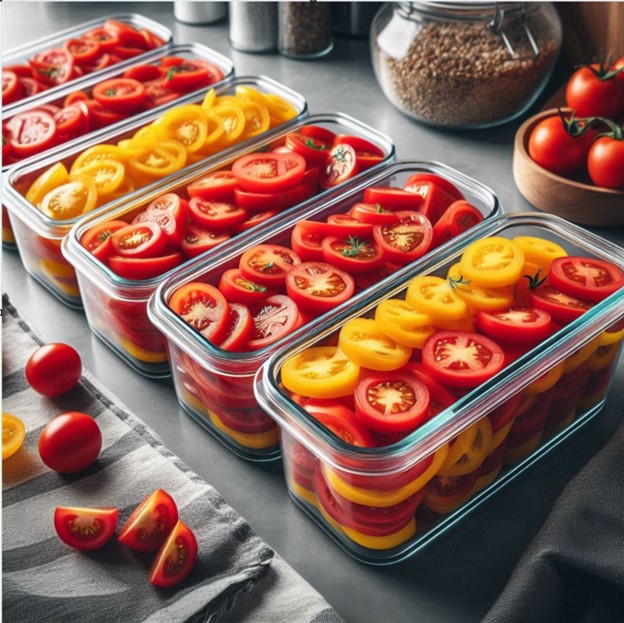
Here’s where slicing becomes versatile. Each technique has its own purpose, and the introduction explains when to use it.
For Cherry Tomatoes
Small cherry tomatoes are fiddly to slice one by one. This trick saves time and keeps your fingers safe.
Steps:
Place several between two lids (like yogurt container lids).
Hold gently.
Slice through the middle with one motion.
For Wedges
Wedges are perfect for rustic salads, roasting, or serving alongside dips. They showcase the tomato’s natural shape.
Steps:
Cut the tomato in half.
Slice each half into quarters.
Cut quarters again if smaller wedges are needed.
For Dicing
Diced tomatoes are the backbone of salsas, bruschetta, and sauces. Precision here ensures even cooking and presentation.
Steps:
Slice into rounds.
Stack the rounds.
Cut into strips, then cross-cut into cubes.
Bonus Tips for Slicing Tomatoes
These are the small adjustments that elevate your slicing from functional to flawless.
- Always use a sharp knife.
- Chill tomatoes slightly for firmer texture.
- Wipe the knife between slices to avoid juice smearing.
- Use a gentle grip—too much pressure squashes the tomato.
- Advanced Tricks & Chef Secrets
- Once you’ve mastered the basics, these tricks add finesse and flair to your slicing.
- Use a bread knife if you don’t have a tomato knife.
- Angle cuts create elegant slices for plating.
- Lightly salt tomatoes before slicing to firm them up.
- Layer slices with herbs for beautiful garnishes.
Tomato Slicing in Different Cuisines

Tomatoes are universal, but each cuisine uses them differently. Knowing how to slice for each style enhances authenticity.
Italian: Thin slices for Caprese salad.
Mexican: Diced for pico de gallo.
Indian: Wedges for curries.
French: Paper-thin slices for tarts.
Common Mistakes to Avoid
Avoiding these pitfalls saves time, reduces mess, and ensures your slices look professional.
- Using a dull knife.
- Pressing too hard.
- Cutting on an unstable board.
- Ignoring tomato variety.
Your Checklist For Slicing Tomatoes
A quick reference to keep your slicing routine smooth and efficient.
- Wash and dry tomatoes
- Remove core if needed
- Stabilize on cutting board
- Use serrated knife with gentle sawing motion
- Adjust thickness based on dish
- Wipe knife between slices
Final Thoughts
Slicing tomatoes is more than a kitchen task—it’s a skill that reflects care and precision. With the right knife, steady hands, and thoughtful technique, you’ll achieve slices that elevate your dishes visually and texturally.
Whether you’re preparing a rustic salad, a gourmet sandwich, or a delicate garnish, perfectly sliced tomatoes make all the difference.
Leave a Reply