The day begins with sunlight spilling across the balcony, touching the leaves of your tomato plants like a gentle wake‑up call. You step outside, coffee in hand, and notice the faint shimmer of dew on the soil.
The pots stand like little kingdoms—each one holding a story of growth, thirst, and patience. You bend down, press your finger into the soil, and wonder – Is it time to water again? Because in pots, tomatoes live by a different rhythm.
They don’t have deep earth to draw from or underground reserves to sip slowly. Their world is small, contained, and entirely dependent on you—the gardener who decides when the rain falls.
The Secret Life Beneath the Pot
Table of Contents
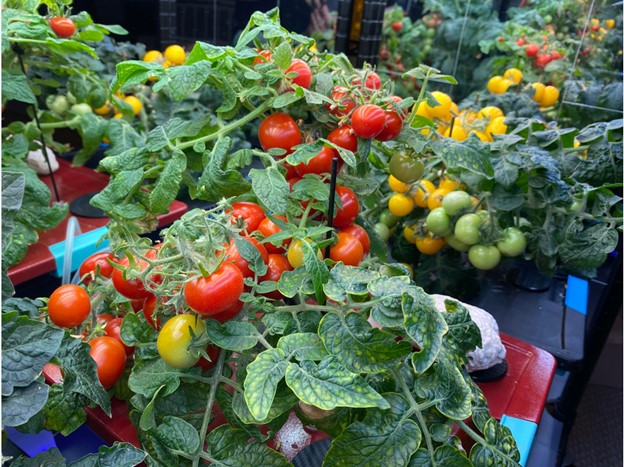
Inside that confined space, the roots stretch and twist, searching for moisture. The sun warms the pot walls, and water evaporates faster than you’d imagine.
What looks lush in the morning can wilt by noon. It’s a quiet drama that plays out daily—a balance between too much and too little.
Learning to water tomatoes in pots isn’t about following a strict schedule. It’s about listening. The soil speaks through texture, the leaves whisper through color, and the fruit tells you when the rhythm is right.
Steps to Water Tomatoes in Pots Properly
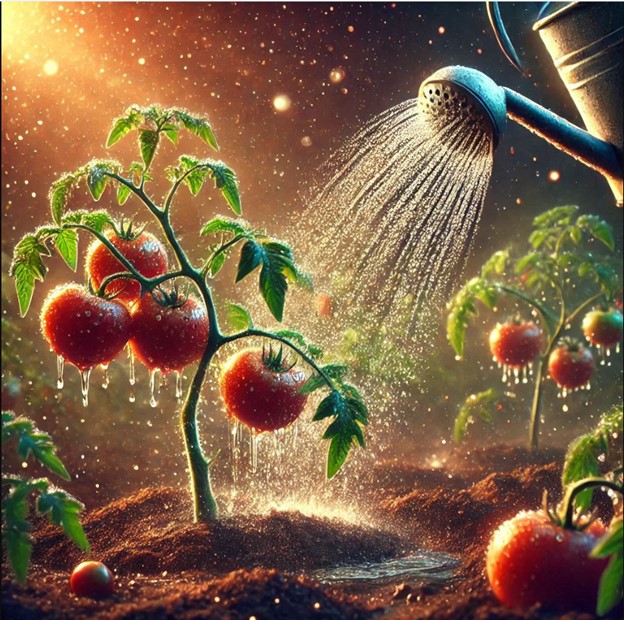
Watering tomatoes in pots is less about rigid rules and more about developing a gardener’s intuition. Each step is a small ritual, a way of tuning into the plant’s needs. Think of it as a dance—sometimes slow, sometimes urgent, but always responsive to the signals your tomatoes give you.
Check the Soil Daily
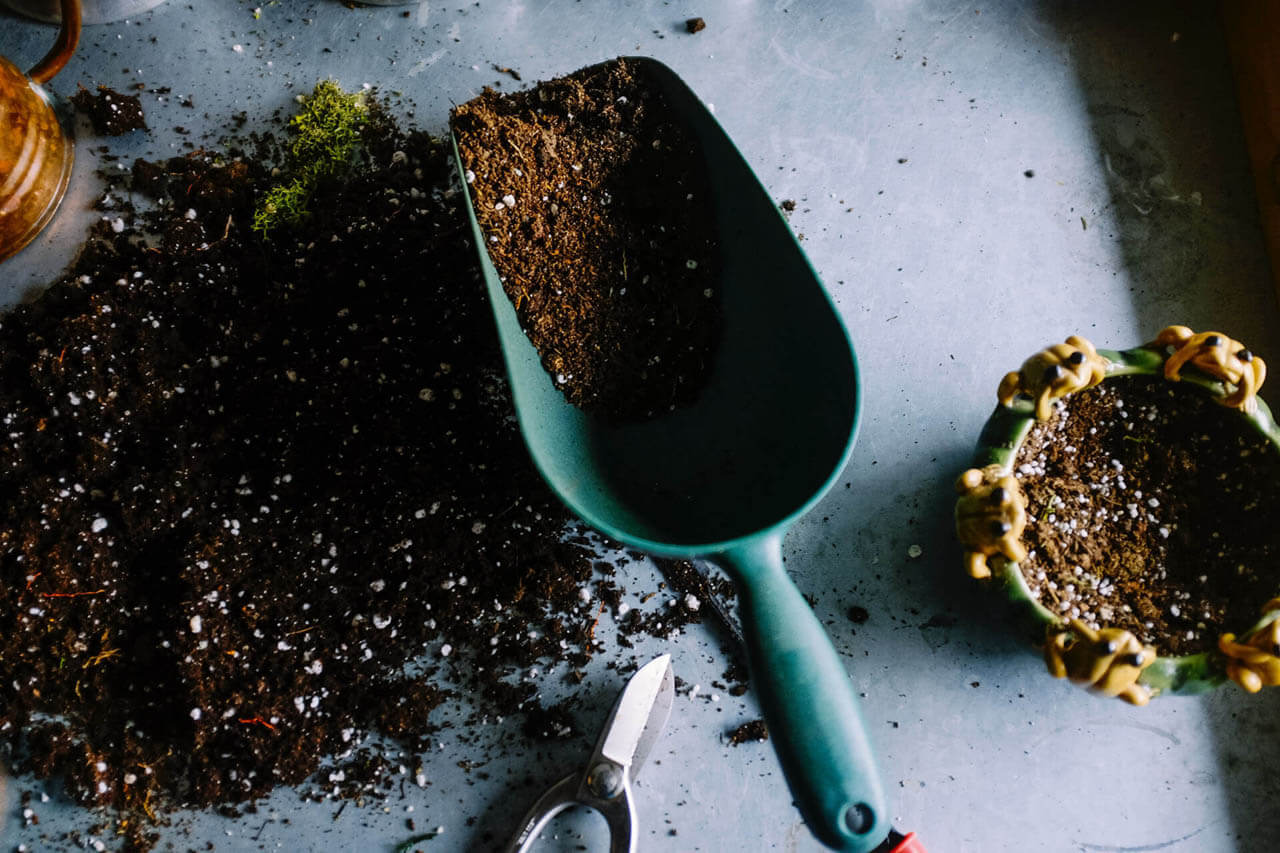
Soil in pots dries faster than in garden beds. Press your finger about an inch into the soil. If it feels dry, water immediately. If it feels moist, you can wait. You can follow this guide to know how to lower the PH balance of soil for growing tomato plants.
This simple test keeps you connected to your plants, reminding you that watering is about observation, not routine.
Water Deeply Until It Flows
Deep watering ensures roots get full access to moisture. Pour until water drains from the bottom holes. Avoid shallow watering that only wets the surface.
Think of it as filling the pot’s underground reservoir—giving roots the strength to grow deep and steady.
Choose Morning as the Best Time
Morning watering helps plants absorb moisture before heat rises. Water early in the day.
Prevents fungal issues from overnight dampness. It’s the golden hour when plants drink happily, preparing for the long day ahead.
Adapt to Weather Conditions
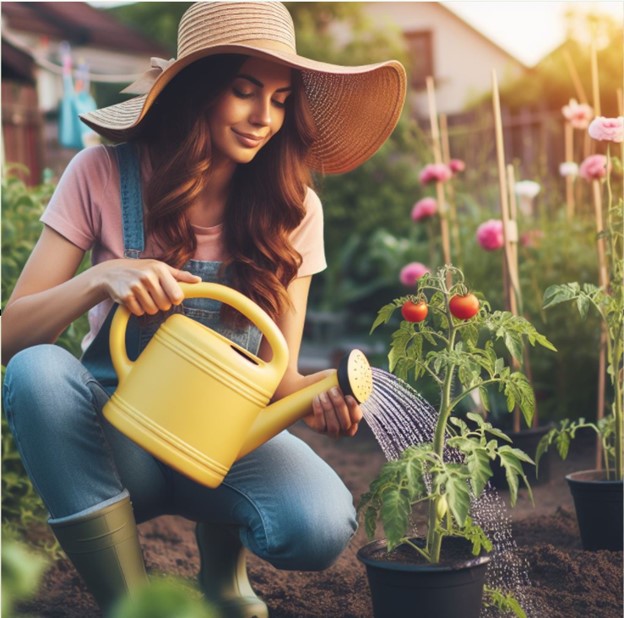
Hot days demand more frequent watering than cool ones. Daily watering in hot, windy weather.
Every 2–3 days in cooler or cloudy conditions. Your watering rhythm should shift with the weather’s mood—responsive, flexible, and thoughtful.
Mulch to Retain Moisture
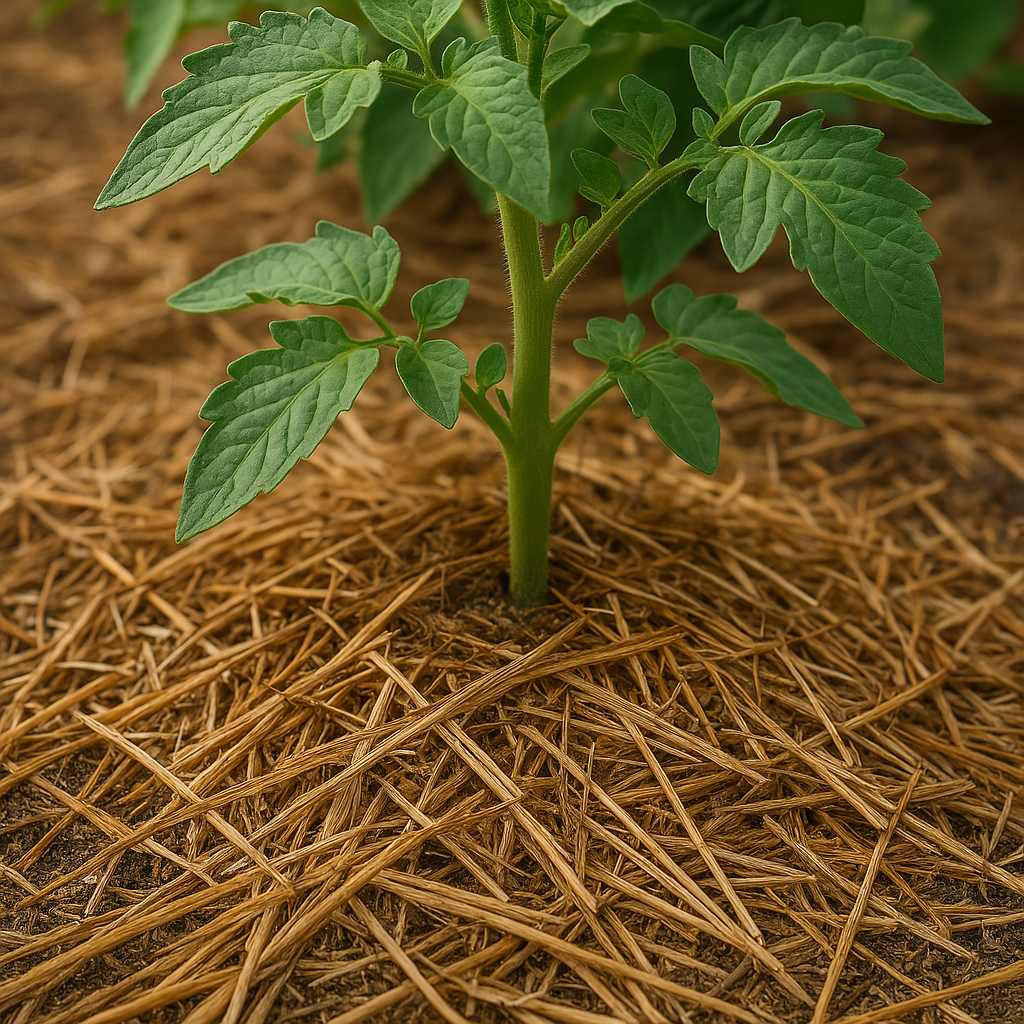
Mulch slows evaporation and keeps roots cool. Add straw, shredded leaves, or coco coir.
Prevents soil splash and reduces disease risk. Mulch is like a protective blanket, shielding the soil from the harsh sun and locking in precious moisture.
Watch for plant signals tomatoes show clear signs when watering is inconsistent. Drooping leaves thirst. Yellowing leaves, curling leaves or, cracked fruit irregular watering. Your plants speak through their posture and color. Paying attention turns watering into a conversation.
Use the Right Pot Size
Pot size affects how quickly soil dries out. Larger pots retain moisture longer. Smaller pots need more frequent watering.
Choosing the right container is like choosing the right home—comfort matters, and it changes how often you’ll need to water. Also know
Wrapping Up
Watering tomatoes in pots is more than a chore—it’s a daily ritual, a dance between gardener and plant. Some mornings call for a generous pour, others for patience. Over time, you’ll learn the subtle cues – the hiss of water hitting dry soil, the way leaves lift after a drink, the scent of damp earth rising from the pot.
And when the first tomato ripens, glowing red against the green leaves, you’ll know that every careful check, every deep watering, every moment of attention was part of the story.
The rhythm of watering isn’t just about keeping plants alive—it’s about nurturing a partnership, one drop at a time.
Leave a Reply