There’s something profoundly magical about plucking a ripe, red or sungold tomato from a plant you’ve nurtured yourself. Outdoors, the vast sky, open soil, and passing insects do much of the heavy lifting.
Indoors, however, the narrative changes entirely. You step into a grander role – you become the gardener, the changing weather, and the pollinator all at once.
Growing tomatoes inside your home is less about traditional farming and more about curating a delicate, thriving ecosystem. It is a rewarding blend of science, interior design, and patience, allowing you to harvest fresh produce even when winter rages outside your window.
Choosing the Right Variety
Table of Contents
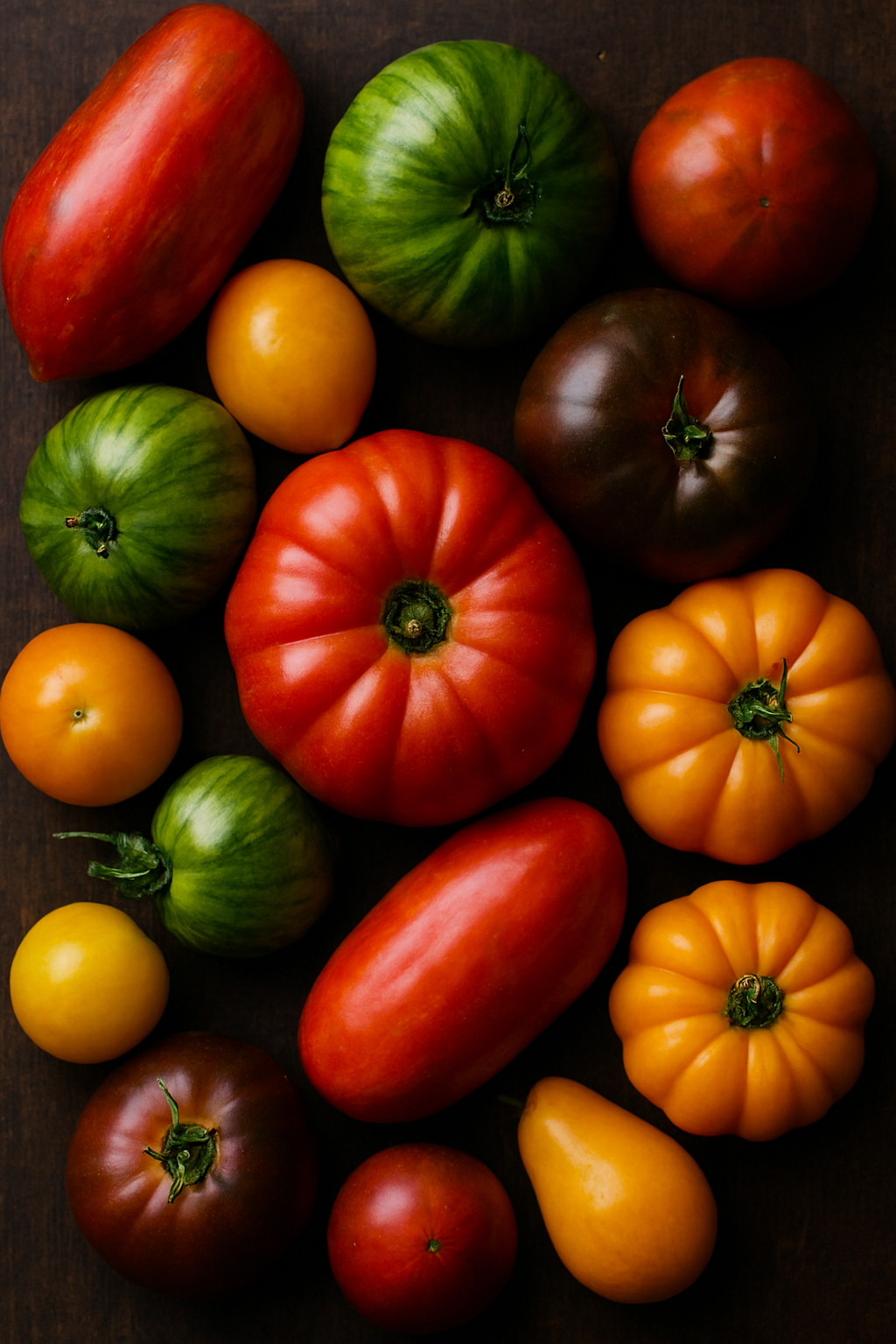
Before you even touch a grain of soil, your indoor gardening story begins with choosing the right characters. Not all tomatoes are suited for life inside four walls, a wild, indeterminate beefsteak variety will quickly overtake your living room like a jungle vine. You need plants engineered for cozy spaces.
Compact Tomato Varieties For Indoors
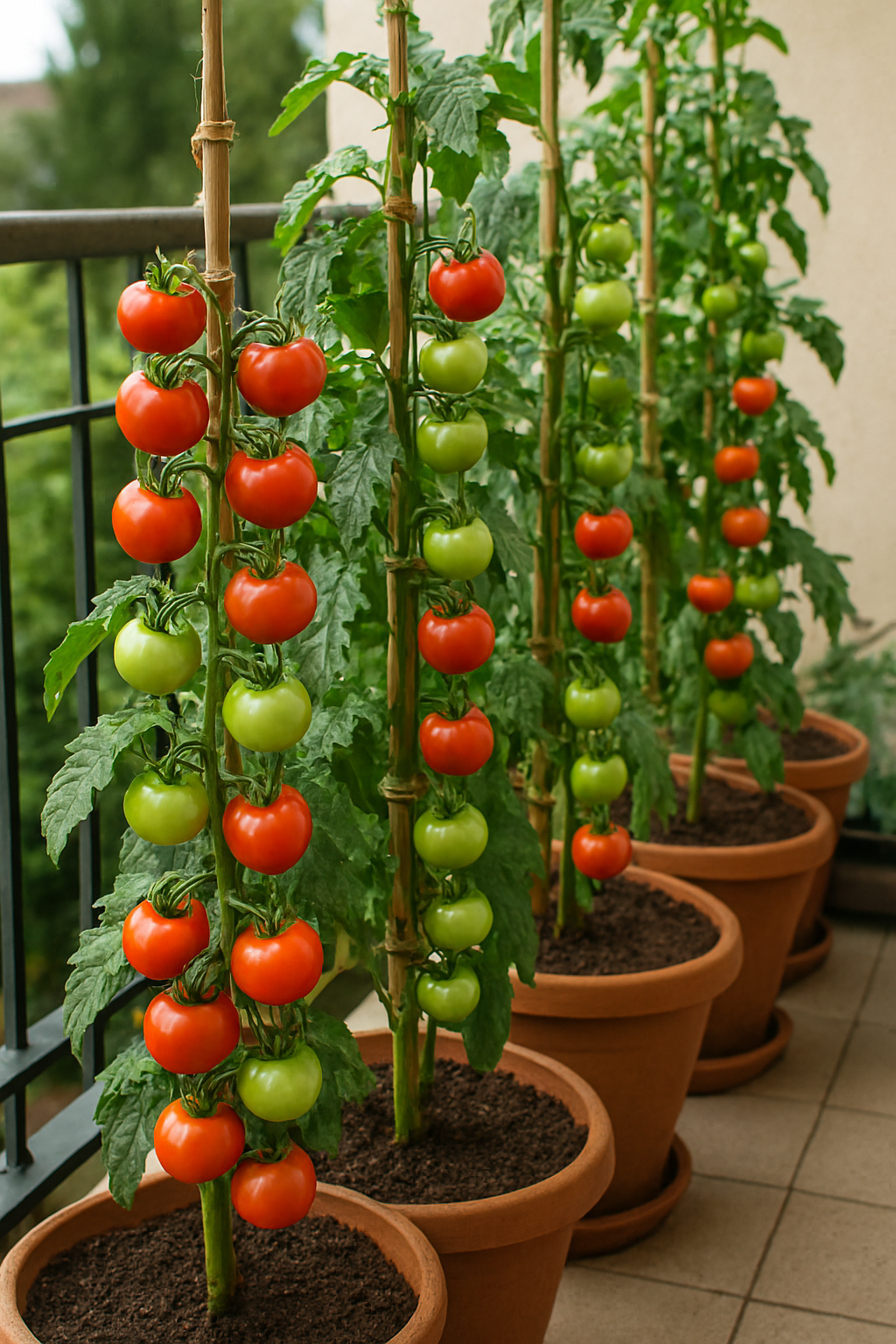
Imagine a tomato plant that doesn’t sprawl across your furniture but stands neatly on a windowsill, offering heavy clusters of bright fruit. Determinate cherry tomatoes and micro-dwarf varieties are your best allies.
These plants are genetically programmed to grow to a specific, manageable height—usually between 8 to 24 inches. They grow compactly, set their fruit all at once, and reward you with bursts of concentrated sweetness without requiring complex trellising.
Setting the Stage – Containers and Soil
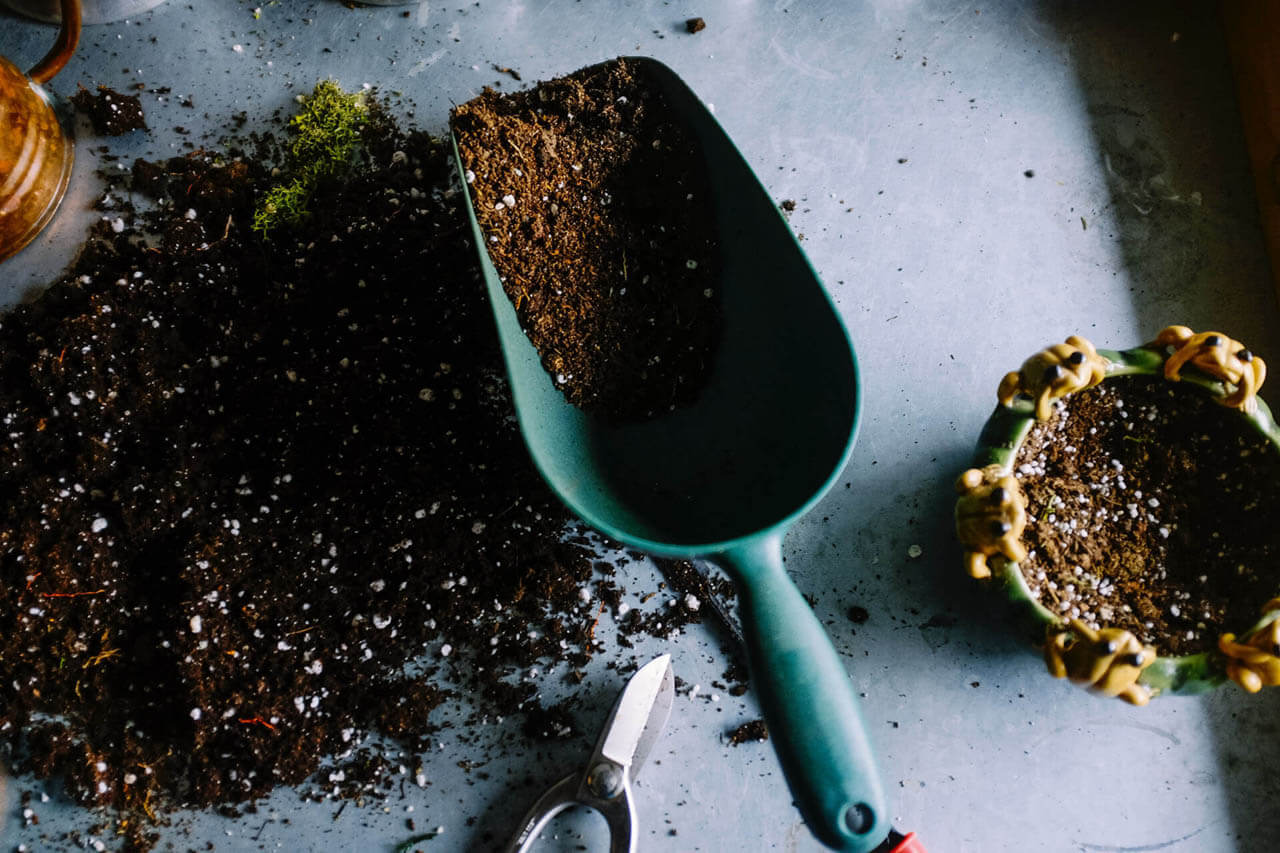
Every plant needs a foundation, and for indoor tomatoes, that home is a combination of the perfect vessel and the ideal growing medium.
The Container’s Tale
Think of the pot as the stage where your tomato grows. If the stage is too small, the roots become bound, stunt growth, and choke out potential fruit.
- Size Matters – For micro-dwarfs, a 6-to-8-inch pot might suffice, but for standard indoor cherry varieties, a 12-inch (3-to-5 gallon) pot is the sweet spot.
- Drainage is Non-Negotiable – Tomatoes absolutely despise “wet feet.” Ensure your chosen container has ample drainage holes at the bottom so excess water can escape freely. Consider placing a saucer, underneath lined with pebbles, to catch runoff without letting the pot sit in stagnant water.
The Soil Symphony
Regular backyard garden soil is the villain of this chapter. It is far too heavy, compacts easily in pots, and can introduce outdoor pests and diseases into your clean home. Instead, compose a melody of light, airy materials:
- The Ideal Mix – Use a high-quality, lightweight potting mix amended with perlite or vermiculite for aeration.
- The Nutrient Boost – Blend in a generous handful of organic compost or worm castings. This keeps the roots breathing and consistently nourished, providing a balanced, slow-release diet for your plant’s early growth. You should also take care of the pH balance of the soil.
Light – The Substitute Sun
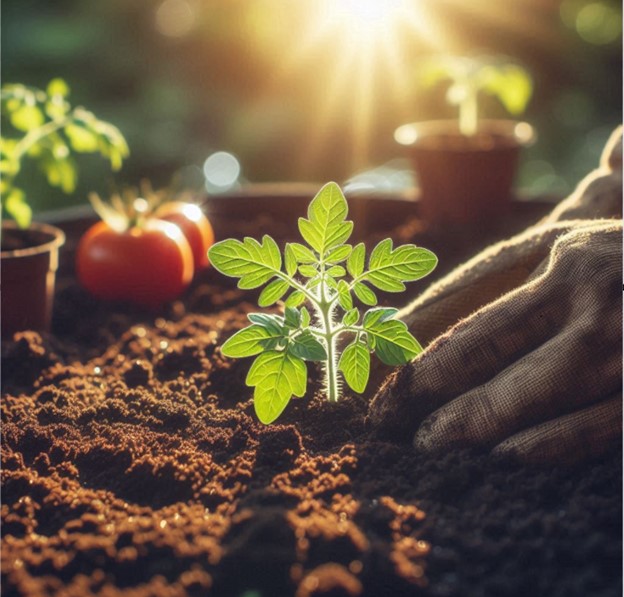
Tomatoes are sun-worshipers. To trigger photosynthesis and fuel the energy-intensive process of fruit production, they require an abundance of sunlight. Indoors, you must replicate the open sky.
- The Natural Light Story – If you are relying solely on nature, place your pots near your brightest south-facing or west-facing window. Here, sunlight streams in for at least 6 to 8 hours a day. You will need to rotate the pot a quarter-turn every few days; otherwise, you’ll notice your plant awkwardly stretching and leaning toward the glass like a sunbather.
- Artificial Sunlight – Because window light fluctuates with the seasons, supplemental grow lights are the true heroes of indoor gardening. Modern LED grow lights are energy-efficient and can provide the full spectrum of light your plant craves.
Hang the lights just 4 to 6 inches above the top of the seedlings, raising them as the plant grows. Keep the lights on a timer for 14 to 16 hours a day. Just like humans, plants need to rest, so ensure they get 8 hours of darkness to process their energy.
Watering and Feeding – The Rhythm of Care
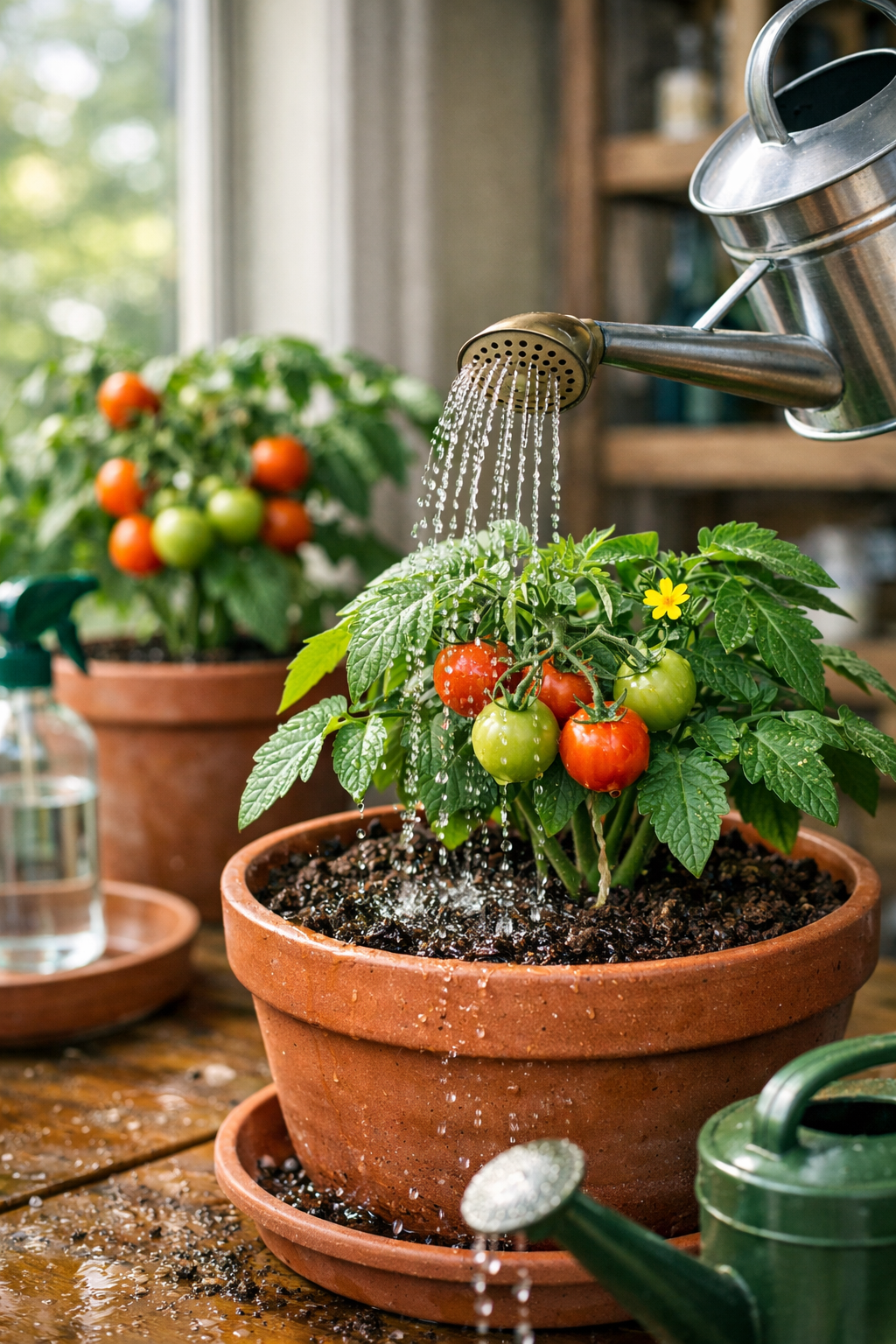
Watering is not just a mundane chore—it is a daily ritual of observation. Because indoor environments lack the natural evaporation caused by outdoor winds, balancing moisture is an art form.
The Gentle Pour
Picture yourself pouring tepid water slowly around the base of the plant until it trickles out of the drainage holes. This deep watering ensures the entire root ball drinks fully. However, don’t repeat the act too soon.
The First-Knuckle Rule – Push your index finger into the soil. If the top inch feels completely dry, it’s time to water. If it feels damp, walk away. Overwatering suffocates the roots, inviting root rot and fungal diseases.
The Heavy Feeders
Tomatoes are incredibly hungry plants. Once they begin to bloom, their nutritional needs skyrocket. Feed them every two weeks with a water-soluble, organic fertilizer. Look for a mix lower in nitrogen and higher in phosphorus and potassium often labeled as a “tomato or bloom booster” to encourage vibrant flowers and sturdy fruit rather than just excess green leaves.
Pollination – Playing the Bee
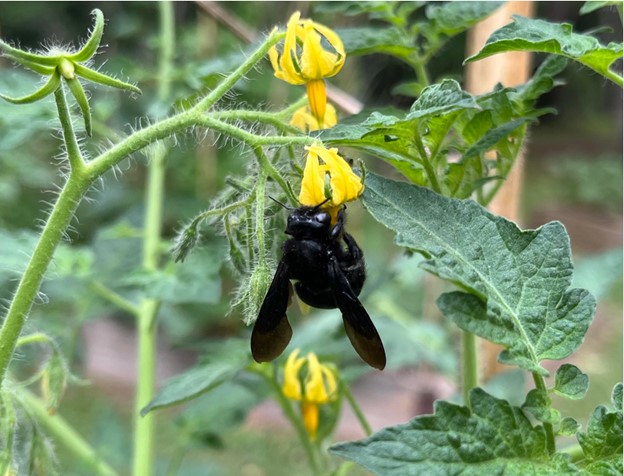
Outdoors, the wind rustles the branches and bees buzz from flower to flower, naturally shaking the pollen loose. Indoors, the air is still, and there are no insects. Here, you must step in and play the role of the wind.
Tomato flowers are self-pollinating, meaning each blossom contains both the male and female parts. They just need a little vibration to get the job done. You can also hand-pollinate them.
- The Gentle Shake – Once or twice a day, when the yellow flowers are fully open, gently tap or wiggle the main stems of the plant.
- The Electric Tool Method – For an authentic “bee” frequency, touch the back of an electric toothbrush to the flower stems for a few seconds.
- The Paintbrush Technique – Lightly swirl a small, soft artist’s paintbrush or cotton swab inside each flower to manually transfer the golden pollen.
Temperature and Humidity – Controlling the Climate
You hold the thermostat to this tiny world. Tomatoes thrive in cozy, Mediterranean-like warmth, and keeping their environment stable is key to a bountiful harvest.
- The Temperature Sweet Spot – Aim to keep your indoor garden room between 18°C and 29°C (65°F–85°F) during the day. If the temperature drops too low at night (belo0w 15°C/60°F), the plant may drop its blossoms. If it gets too hot, the pollen becomes sterile.
- Air Circulation – Indoor air can become stagnant, which invites mold and pests like spider mites or whiteflies. Place a small, oscillating desk fan near your plants on a low setting. This creates a gentle breeze that strengthens the plant’s stems and keeps fungal spores from settling on the leaves.
Wrapping Up
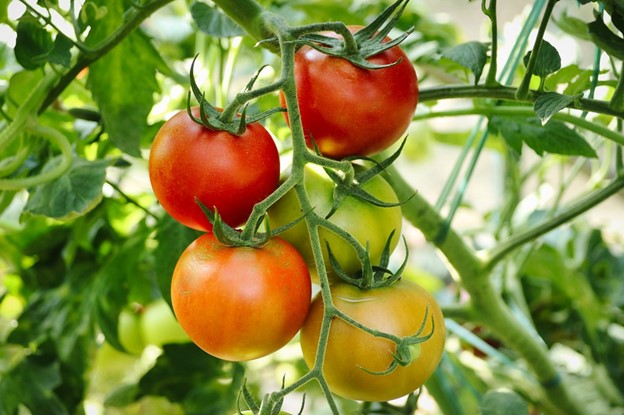
Finally, after weeks of watering, buzzing like a bee, and adjusting lights, the green globes begin to shift. They blush into deep crimson, vibrant orange, or sunny yellow, depending on the variety you choose.
The moment of the harvest is pure satisfaction. Cup the tomato in your hand, give it a gentle twist, and snap it cleanly from the vine. Eating a tomato that is still warm from your grow lights is an unparalleled culinary experience.
That first bite is bursting with a rich, acidic sweetness that store-bought, truck-transported tomatoes can never replicate. It is the literal taste of your patience, your design, and the beautiful miniature ecosystem you built right in your living room.
Leave a Reply