Tomatoes may start as tiny seedlings, but give them the right conditions and they can quickly turn into surprisingly large plants. One tomato plant that looks perfectly happy in a small pot in spring can become a sprawling mass of stems and leaves by midsummer.
That is why spacing matters. The amount of space a tomato needs depends on the variety, how you plan to support it, whether you’re growing it in the ground or in a container, and how much pruning you do. A compact patio tomato has very different space requirements from an indeterminate heirloom variety that can keep growing throughout the season.
How Much Space Should You Leave Between Tomato Plants?
Table of Contents
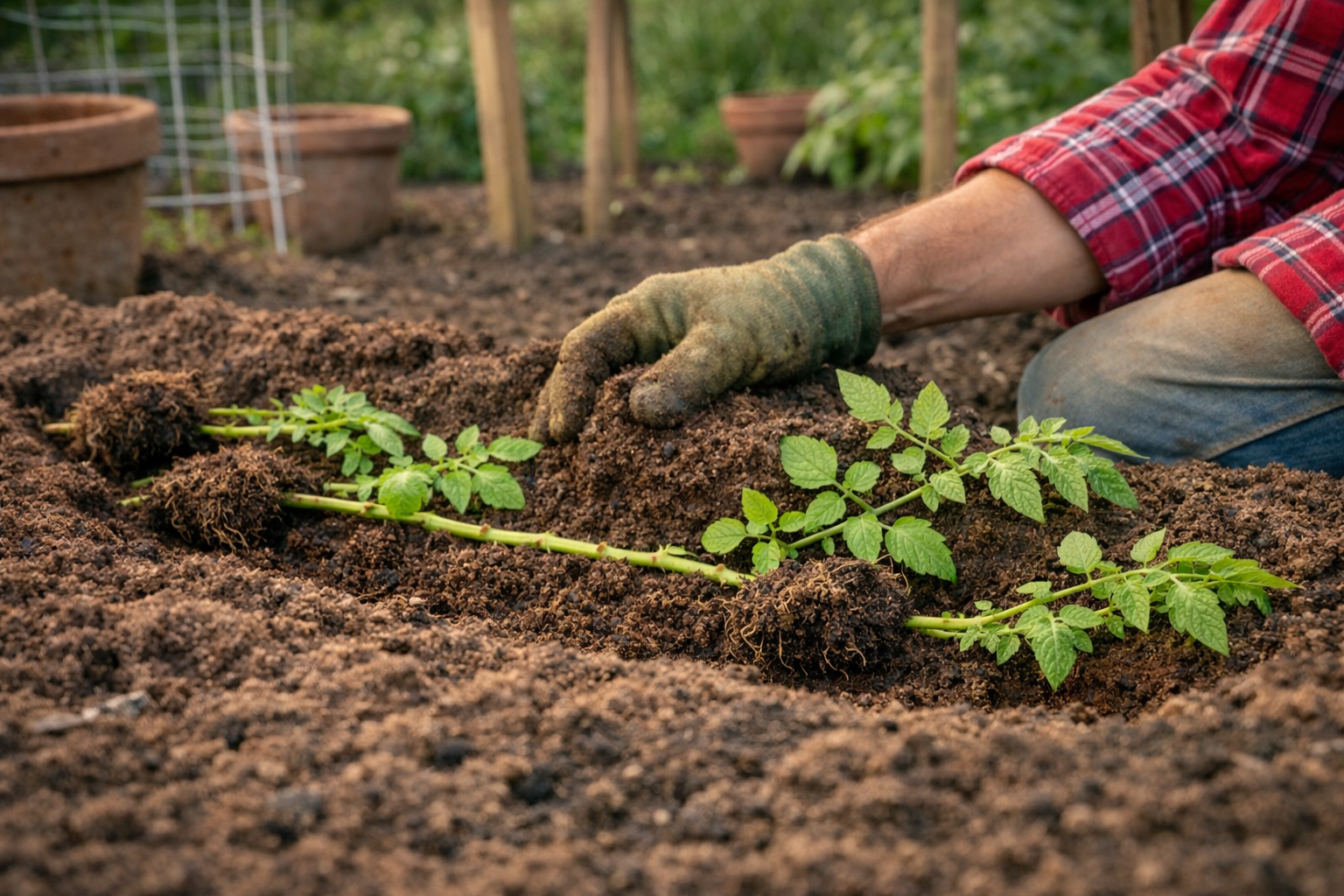
For most tomatoes grown in the ground, a good starting point is around 18 to 24 inches between plants. However, larger varieties often benefit from more room. If you’re growing vigorous indeterminate tomatoes, spacing them 24 to 36 inches apart can make maintenance easier and improve airflow.
The distance between rows matters too. Leave roughly 3 to 4 feet between rows when growing tomatoes in a traditional garden. This gives you enough room to walk between plants, inspect the leaves, water the soil, harvest fruit, and tie plants to their supports.
It can be tempting to squeeze plants closer together when your garden space is limited. After all, a tomato seedling only occupies a tiny amount of space.But remember that you’re spacing the plants for their mature size, not their size on planting day. A six-inch seedling can eventually become a plant several feet wide.
Determinate and Indeterminate Tomatoes Need Different Amounts of Space
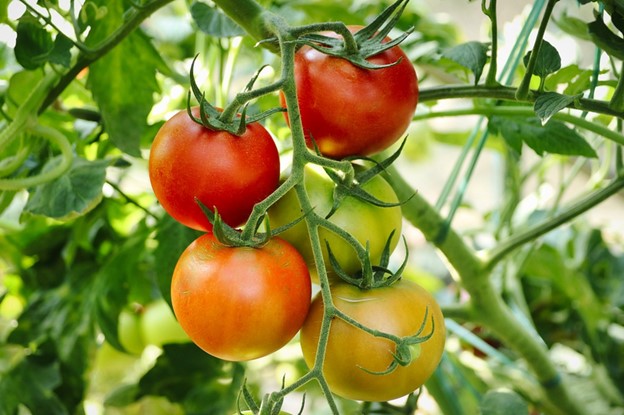
One of the easiest ways to determine how much room your tomatoes need is to find out whether they’re determinate or indeterminate. Determinate tomatoes generally grow to a more limited size. They produce much of their crop over a relatively short period and then stop producing new growth once they reach their natural size.
Because of this compact growth habit, determinate varieties can be easier to fit into smaller gardens. Indeterminate tomatoes are different.
They continue producing new stems and fruit throughout the growing season as long as weather and growing conditions allow. With a suitable support system, some can become several feet tall and quite wide.
So, if you plant an indeterminate tomato in a small corner and expect it to stay compact, you may have a problem a few months later. The plant may spread into neighboring plants, block sunlight, and become difficult to manage.
For that reason, indeterminate tomatoes generally deserve more space than compact determinate varieties.
How Much Space Do Tomatoes Need in a Raised Bed?
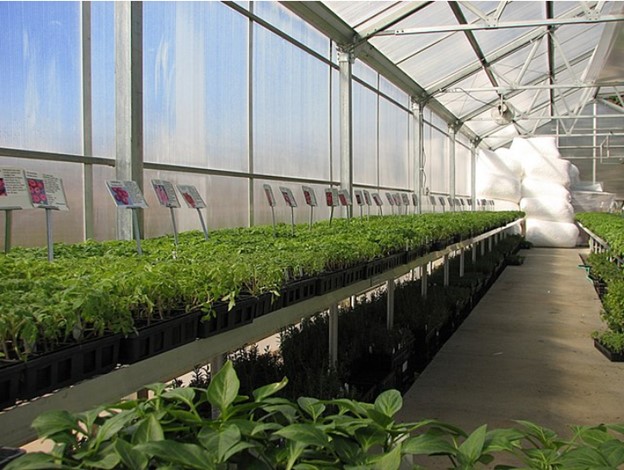
Raised beds are excellent for tomatoes because you can control the soil, drainage, and planting layout. If you’re using a raised bed, you don’t necessarily need to dedicate an enormous amount of space to each plant, but you should avoid creating a dense jungle of tomato plants.
A common approach is to leave around 18 to 24 inches between plants, depending on the variety and support method. For particularly vigorous indeterminate varieties, giving plants closer to 24 to 36 inches can make the garden easier to manage.
The important thing is to think about the mature canopy. Imagine planting several tomato seedlings in a four-foot-wide raised bed. On planting day, everything looks spacious. A month or two later, the plants may have expanded dramatically.
If their leaves are touching and overlapping heavily, airflow becomes restricted.
That can create a damp environment around the foliage, particularly after rain or watering, which can increase the likelihood of certain fungal and bacterial problems.
More space isn’t always about getting more fruit from each individual plant. Sometimes it’s about making sure the plants you already have remain healthy.
How Much Space Does a Tomato Plant Need in a Container?
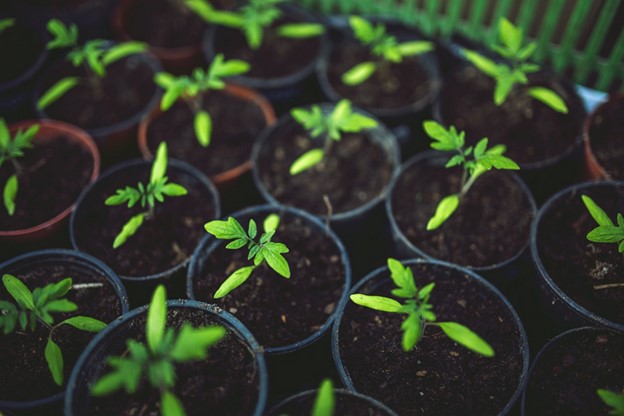
Container-grown tomatoes have different requirements because the roots are limited by the size of the pot.For many full-sized tomato plants, a container of around 5 gallons or larger is a practical starting point, although larger containers can provide more room for roots and moisture.
Some vigorous indeterminate varieties can perform better in containers closer to 10 gallons or more. Compact determinate and patio varieties can often be grown in smaller containers, depending on the specific cultivar. The container should also have adequate drainage.
A large pot without drainage holes isn’t an advantage because excess water can remain around the roots. Think of the container as the tomato plant’s entire underground world. In a garden bed, roots can continue exploring surrounding soil. In a container, they’re restricted to whatever volume you’ve provided. This means a small pot can dry out quickly and may require more frequent watering and feeding.
How Much Vertical Space Do Tomatoes Need?
Horizontal space isn’t the only thing you need to consider. Tomatoes also need vertical space, particularly indeterminate varieties. If you’re using a stake, cage, trellis, or string support, check the expected mature height of the variety before planting.Some indeterminate tomatoes can grow well beyond 6 feet, while certain vigorous varieties can become even taller under excellent conditions.
If you’re growing tomatoes on a balcony, patio, or near a window, this becomes particularly important. A plant may have enough floor space but still run out of vertical room. You don’t want to discover halfway through the season that your tomato has reached the ceiling and is still producing new growth. A strong support system should ideally be installed when you plant the tomato rather than trying to force a large, established plant into a support later.
Don’t Forget the Roots
When people think about tomato spacing, they usually look at the leaves. But the roots need room too. Tomato roots spread through the surrounding soil searching for water, oxygen, and nutrients. Crowding several plants into a very small area means their root systems are competing for the same resources. This doesn’t necessarily mean that every tomato needs a perfectly measured circle of empty soil around it.
Healthy garden soil can support extensive root systems. But adequate spacing makes it easier for each plant to access water and nutrients without excessive competition. It also makes watering more practical because you can direct water toward the root zone rather than constantly wetting the foliage.
How Much Space Do Tomatoes Need in a Small Garden?
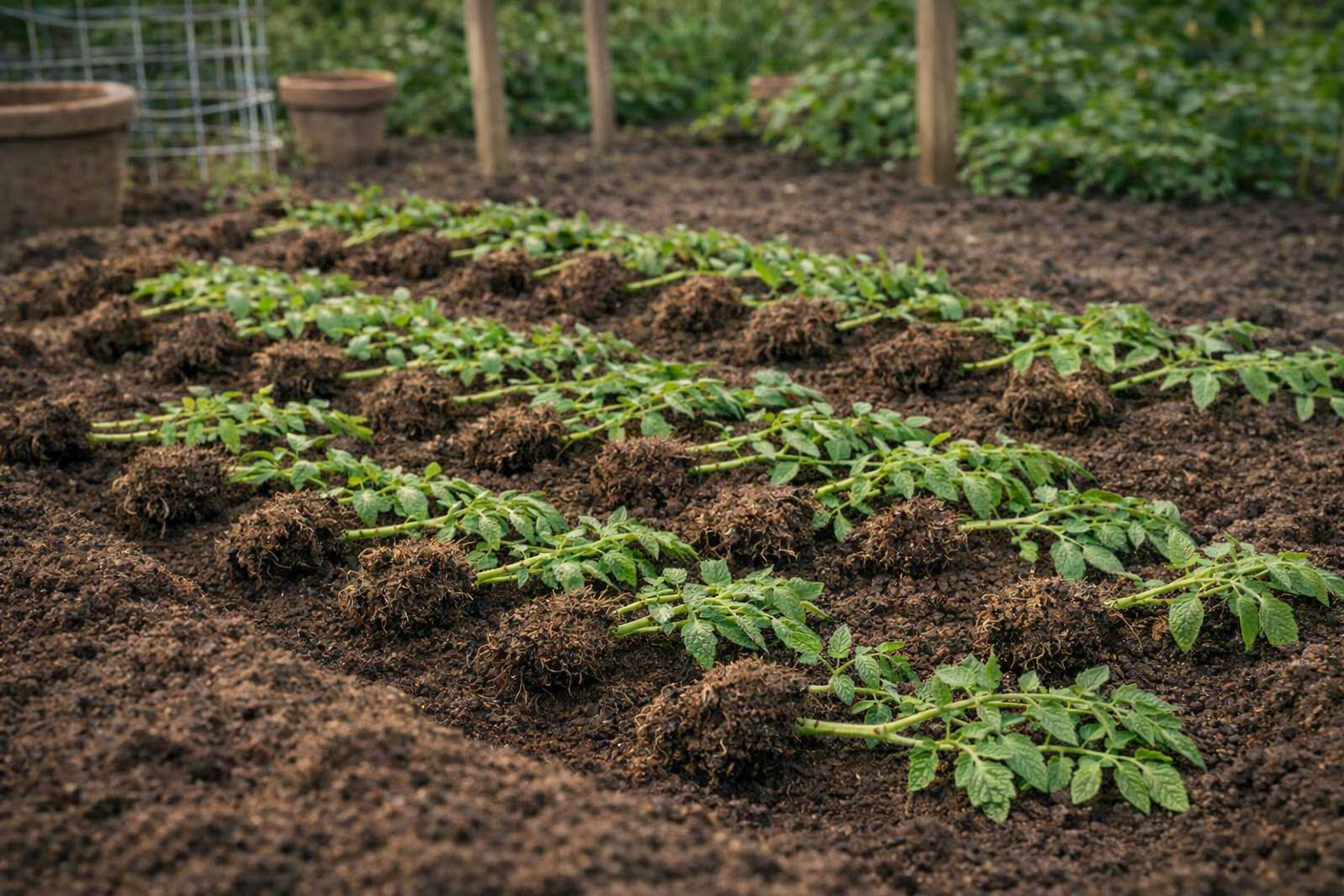
You don’t need a huge backyard to grow tomatoes. A small garden can produce an impressive harvest if you choose varieties that match the available space. Suppose you have a narrow strip along a fence. Rather than planting several sprawling varieties, choose compact plants and train them vertically.
Install supports before the plants become large, and position them so that the mature plants won’t shade everything around them.
Sunlight is particularly important. Tomatoes generally perform best with plenty of direct sunlight, so don’t only measure the physical distance between plants. Consider the shadow each mature plant will cast.
A tomato plant may technically fit in a particular location but still create problems if it blocks sunlight from smaller crops.
Wrapping Up
The biggest mistake with tomato spacing is planning around the seedling rather than the mature plant. That tiny plant in the garden today could eventually have a large root system, several feet of foliage, heavy branches, and dozens of tomatoes hanging from it.
Give it enough room from the beginning and you’ll have a much easier time keeping the plant healthy and harvesting the fruit. And when those first ripe tomatoes finally appear, you’ll be glad you planned for the plant they were going to become—not the tiny seedling you started with.
Leave a Reply