Tomato plants are usually easy to grow, but sometimes they seem to stop growing just when you expect them to develop new leaves and stems. You may notice that your seedlings remain small, the leaves look pale, or your plants take much longer than expected to grow taller. If you’re wondering why your tomato plants are growing slowly, the problem could be related to sunlight, watering, soil quality, temperature, or nutrients.
Slow growth doesn’t always mean your tomato plants are unhealthy. Young plants may need time to establish their roots, especially after transplanting. However, if your plants show little growth for several weeks or develop yellow leaves, weak stems, or other unusual symptoms, it’s worth checking their growing conditions.
In this guide, we’ll explain the most common reasons tomato plants grow slowly and show you how to fix each problem.
What To Do When Tomato Plants Grow Slowly
Table of Contents
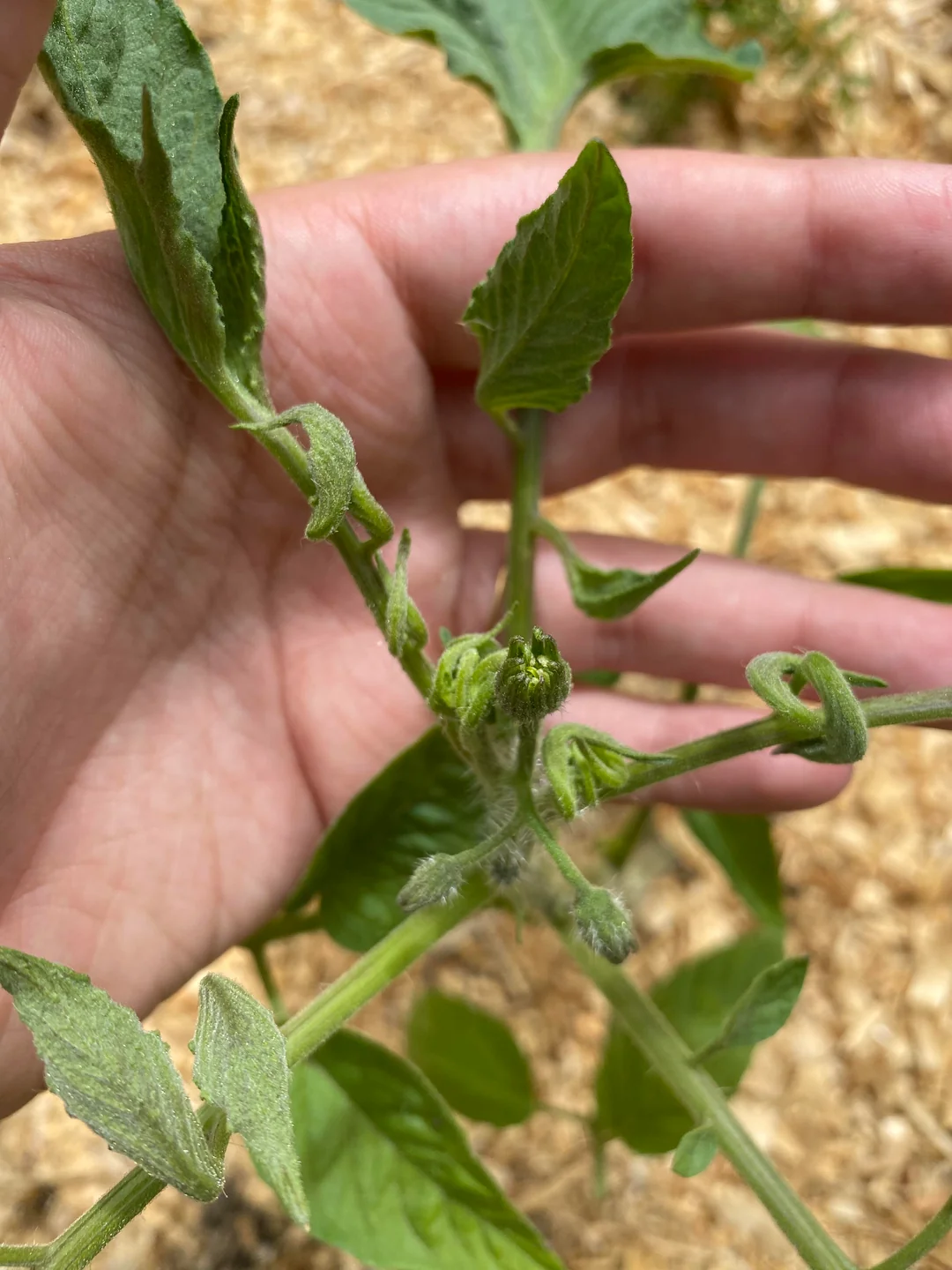
Your Tomato Plants Are Not Getting Enough Sunlight
Tomatoes are sun-loving plants that need plenty of light to grow strong stems, develop healthy leaves, and produce fruit. If your plants receive too little sunlight, they may grow slowly and develop long, thin stems with widely spaced leaves.
Tomato plants generally need around 6–8 hours of direct sunlight each day, with many varieties benefiting from even more when conditions are suitable.
How to fix it
- Move potted tomato plants to a sunny balcony, terrace, or garden location.
- Choose a spot that receives several hours of direct sunlight rather than bright shade alone.
- If nearby trees, walls, or buildings cast shadows over your plants, consider relocating them.
- Rotate pots occasionally if the plants lean strongly toward one direction.
You’re Watering Too Much or Too Little
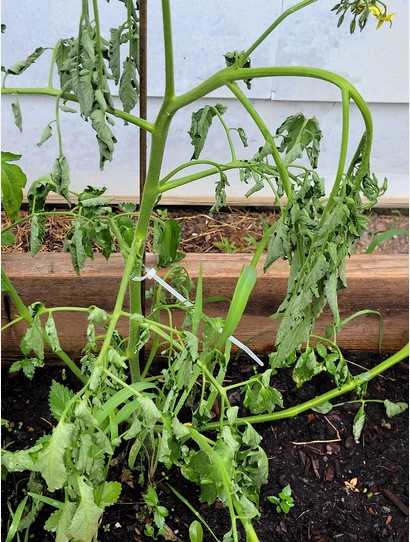
Watering problems are another common reason tomato plants grow slowly. Both underwatering and overwatering can interfere with root development and nutrient absorption.
When the soil stays too dry, the plant struggles to absorb the water it needs for new growth. On the other hand, constantly wet soil can deprive roots of oxygen and encourage root rot.
How to fix it
Check the soil before watering instead of following a rigid daily schedule. If the top layer of soil feels dry, check the moisture a little deeper. Water thoroughly when needed, allowing excess water to drain freely from the bottom of the pot.
For tomato plants growing in the ground, water slowly around the root zone so moisture reaches the deeper roots. During hot weather, you may need to water more frequently, particularly if your plants are growing in containers.
Avoid leaving pots in standing water, and make sure every container has adequate drainage holes.
The Soil Is Poor or Compacted
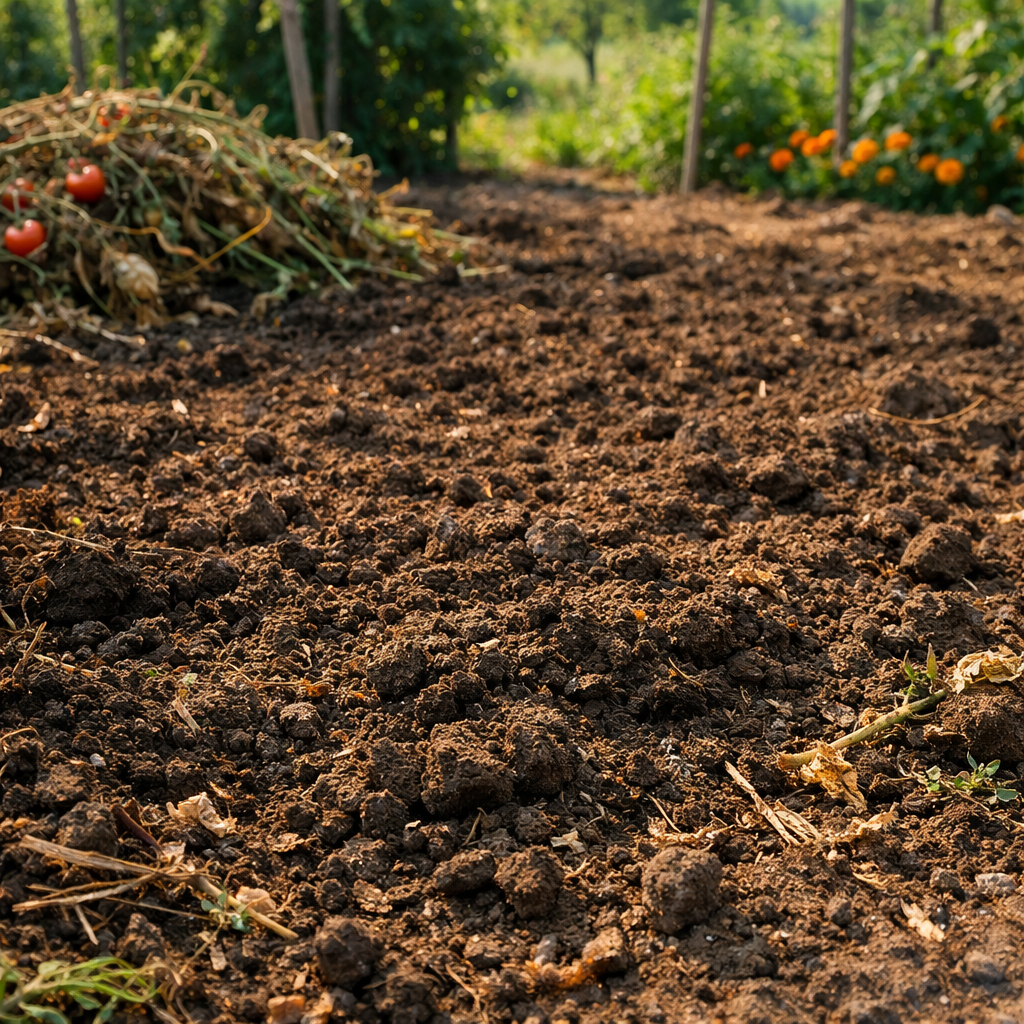
Healthy roots are essential for healthy tomato plants. If your soil is compacted, poorly drained, or lacking organic matter, the roots may struggle to spread and absorb nutrients.
Heavy soil that holds too much water can suffocate roots, while very sandy soil may drain too quickly and dry out before plants receive enough moisture.
How to fix it
Use loose, well-draining soil that holds enough moisture without becoming waterlogged. For container gardening, choose a quality potting mix rather than relying entirely on heavy garden soil.
You can improve garden soil by incorporating mature compost before planting. Compost adds organic matter and can improve soil structure, although it should not be treated as a complete replacement for testing and correcting nutrient deficiencies.
If you grow tomatoes in pots, make sure the containers are large enough for the variety and have sufficient drainage. A small container can restrict root growth and dry out rapidly.
Your Tomato Plants Are Lacking Essential Nutrients
Tomato plants need nutrients to develop roots, leaves, stems, flowers, and fruit. If the soil lacks essential nutrients, growth may become slow or uneven.
Nitrogen deficiency often causes older leaves to turn pale green or yellow, while phosphorus deficiency may contribute to stunted growth and dark or purplish leaves, particularly in cool conditions. However, these symptoms can have other causes, so leaf colour alone cannot confirm a deficiency.
How to fix it
- Use a balanced fertilizer suitable for tomatoes and follow the label instructions.
- Consider a soil test if the plants continue to struggle despite proper watering and sunlight.
- Add mature compost when appropriate to improve soil quality.
- Avoid applying excessive fertilizer in an attempt to force faster growth.
- Too much nitrogen can produce abundant green foliage while delaying flowering and fruit production. Fertilizer salts can also damage roots when products are applied too heavily.
The Temperature Is Too Hot or Too Cold
Tomatoes grow best within a suitable temperature range. Cold soil can slow root development, while very hot weather can stress plants and interfere with normal growth.
Young tomato plants are especially sensitive to cold conditions. Prolonged temperatures well below their preferred range can leave seedlings looking almost unchanged for days.
High temperatures can also cause problems. When the weather becomes extremely hot, tomato plants may wilt during the day, stop producing new growth temporarily, or drop flowers.
How to fix it
- Plant tomatoes outdoors after the risk of frost has passed.
- Wait until the soil is sufficiently warm before transplanting seedlings.
- During extreme heat, use suitable afternoon shade if plants are showing heat stress.
- Apply a layer of organic mulch around established plants to help maintain more consistent soil moisture and temperature.
- Avoid moving indoor seedlings directly into intense outdoor sunlight without gradually acclimating them.
Your Tomato Plants Are Growing in Pots That Are Too Small
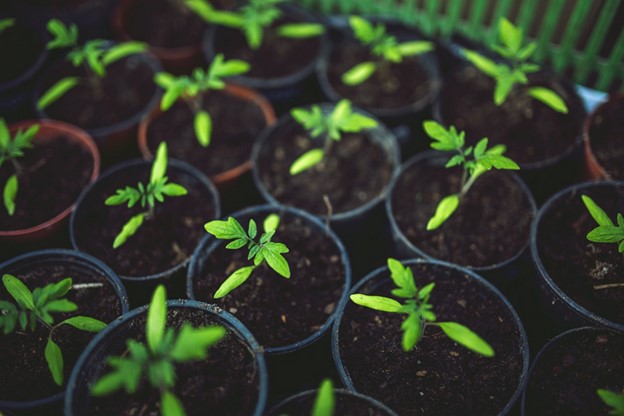
Tomatoes develop extensive root systems, and small containers can restrict their growth. When roots have little room to spread, plants may remain short, dry out quickly, and struggle to absorb enough water and nutrients.
You may also notice roots growing out of the drainage holes or circling around the inside of the pot.
How to fix it
- Choose a container that suits the tomato variety. Many standard indeterminate tomato varieties do well in containers holding roughly 15–20 gallons (about 55–75 litres), while some compact or dwarf varieties can grow in smaller containers.
- If your tomato plant has outgrown its pot, transplant it carefully into a larger container with fresh potting mix. Water it thoroughly after transplanting and protect it from intense midday sunlight while it recovers.
- Always check the expected mature size of your tomato variety before selecting a container.
Pests or Diseases Are Damaging Your Tomato Plants
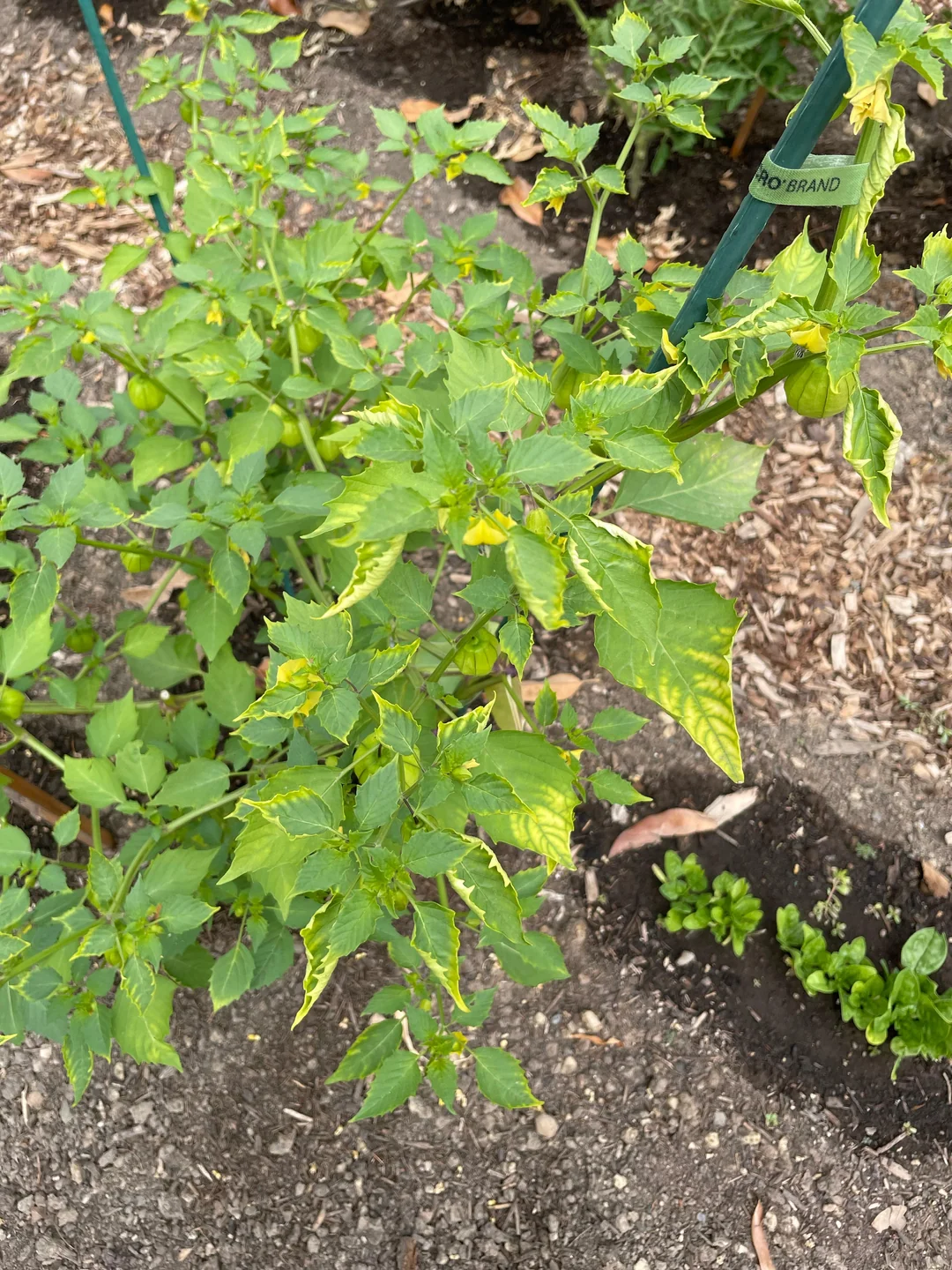
Pests and diseases can weaken tomato plants and slow their development. Aphids, whiteflies, spider mites, and other pests may damage leaves or feed on plant sap. Root diseases can also interfere with the plant’s ability to absorb water and nutrients.
Some problems cause visible damage, while others initially appear as unexplained stunted growth.
How to fix it
Inspect your plants regularly, including the undersides of leaves and the area around the base of each stem. Remove badly affected plant material when appropriate, improve airflow, and avoid wetting foliage unnecessarily when watering.
For minor pest infestations, a strong but gentle stream of water may dislodge some insects. If you need a pest-control product, choose one labelled for the pest and edible tomato plants, and follow its directions carefully.
Avoid treating every slow-growing plant with pesticides or fungicides before identifying the likely cause.
You’re Planting Tomatoes Too Close Together
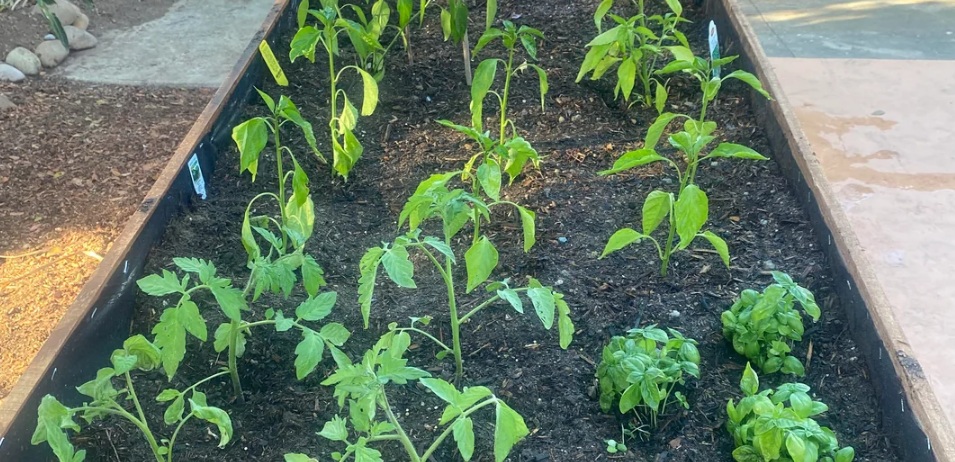
Tomato plants need enough space to receive sunlight, circulate air, and develop healthy roots. When plants are crowded, their leaves may shade one another, and competition for water and nutrients can increase.
Crowded foliage also tends to remain damp for longer, potentially increasing the risk of certain fungal diseases.
How to fix it
Follow the spacing recommendations for your tomato variety. Many standard tomato plants need approximately 18–36 inches (45–90 cm) between plants, depending on their growth habit and support system.
Use stakes, cages, or trellises to keep sprawling stems under control. Prune only as appropriate for the variety and growing system; heavy pruning is not necessary for every tomato plant.
For container gardening, avoid placing too many tomato plants in a single pot. Giving each plant adequate room can improve access to light, water, and nutrients.
How to Help Tomato Plants Grow Faster and Healthier
Once you’ve identified the likely problem, focus on creating stable growing conditions rather than trying several treatments at once.
Here are the most important steps:
- Provide enough sunlight: Aim for at least 6–8 hours of direct sunlight daily when practical.
- Water according to soil moisture: Keep the root zone consistently moist but never waterlogged.
- Improve the soil: Use well-draining soil enriched with mature compost where appropriate.
- Feed carefully: Apply a suitable tomato fertilizer according to its label and avoid overfertilizing.
- Maintain suitable temperatures: Protect young plants from cold and established plants from extreme heat where possible.
- Give roots enough space: Use appropriately sized pots and follow the spacing guidance for your variety.
- Check regularly for pests: Inspect leaves, stems, and roots when growth slows unexpectedly.
- Be patient after transplanting: Allow roots time to establish before expecting rapid new growth.
Remember that healthy tomato plants do not need to grow taller every day. Consistent new leaves, strong stems, and healthy roots are better indicators of progress than height alone.
Wrapping Up
Slow-growing tomato plants can be frustrating, especially when you’re looking forward to harvesting your own fresh tomatoes. Fortunately, the cause is often something you can correct, such as insufficient sunlight, inconsistent watering, poor soil, unsuitable temperatures, or restricted root space.
Start by examining the leaves, checking soil moisture, and reviewing the plant’s growing conditions. Make one or two targeted changes and monitor the plant for signs of recovery. With suitable care and a little patience, many slow-growing tomato plants can return to steady, healthy growth.
Leave a Reply