You pick a tomato that looks perfectly ripe. Its skin is bright red, slightly soft to the touch, and ready for the kitchen. But when you cut it open, you’re surprised to find green flesh or green areas inside. If you’ve ever encountered this problem, you’re not alone.
A tomato that is ripe outside but green inside is a common issue among home gardeners and commercial growers alike. In most cases, the fruit is safe to eat, but the condition can affect flavor, texture, and overall quality. Understanding why it happens can help you produce better tomatoes in future harvests.
Why Are Tomatoes Red Outside but Green Inside?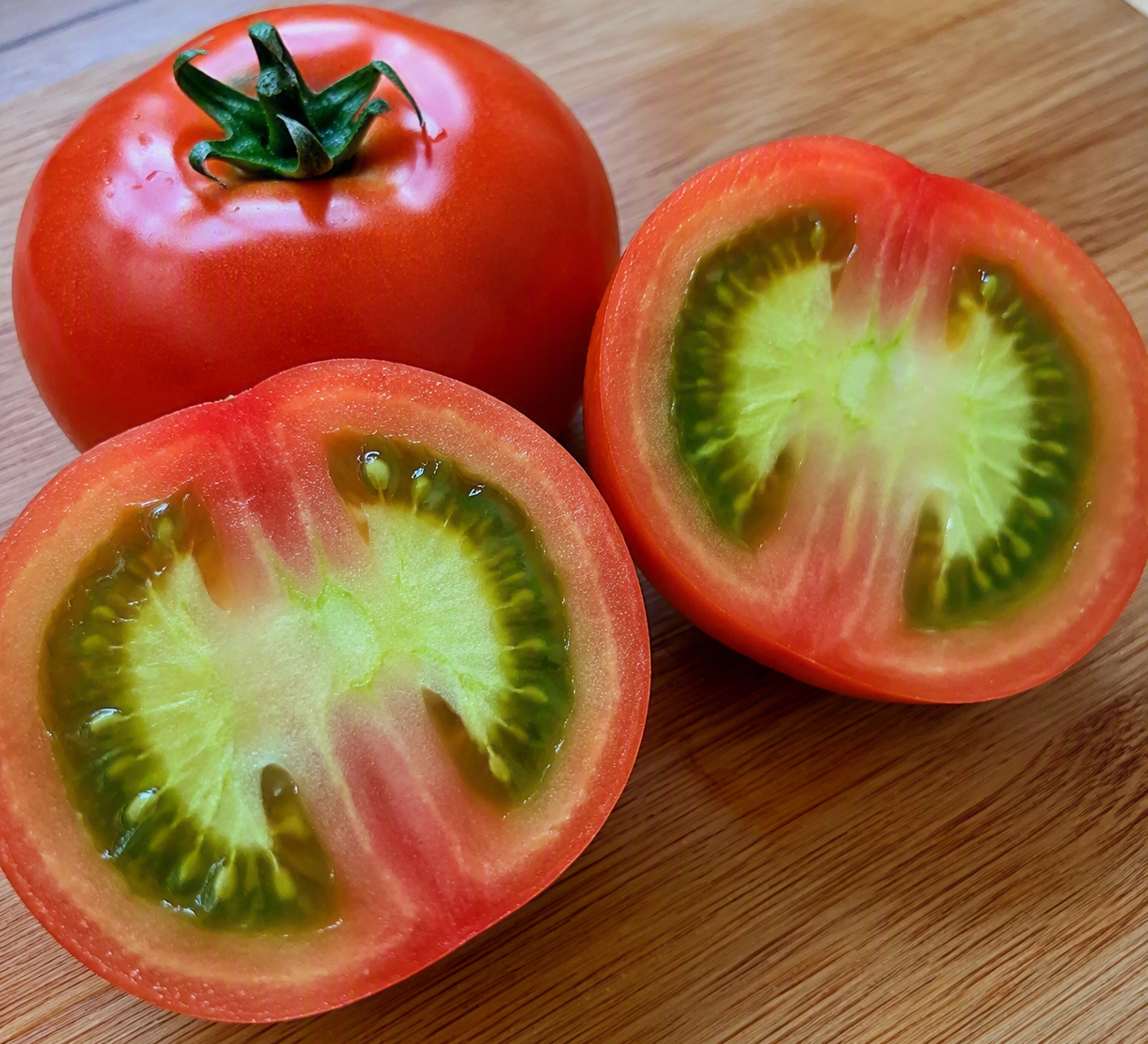
Table of Contents
Tomatoes ripen through a complex process involving color changes, sugar development, and softening of the fruit. Ideally, the entire tomato ripens evenly from the inside out. However, environmental stress, nutrient imbalances, and genetics can interfere with this process.
When that happens, the outer skin may turn red while portions of the interior remain green, firm, or underdeveloped. However if you have harvested green tomatoes, here is how you can use them.
Common Causes of Green Flesh Inside Tomatoes
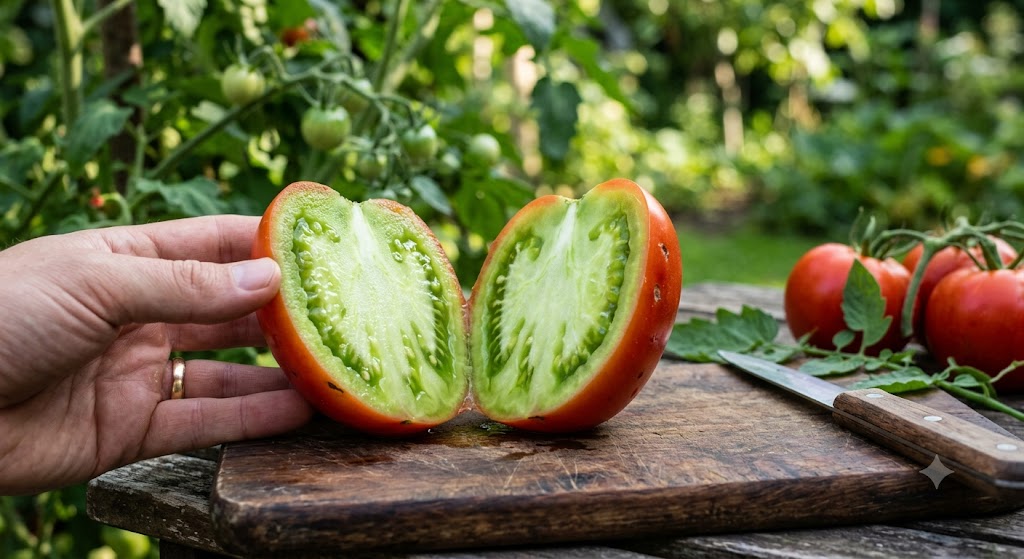
Here are the common reasons why tomatoes can be ripe outside yet green inside:
High Temperatures During Ripening
Excessive heat is one of the most common reasons for uneven ripening.
Tomatoes produce a red pigment called lycopene as they mature. When daytime temperatures regularly exceed 85°F (29°C), lycopene production slows down. The outside of the tomato may still change color, but the interior tissues may not complete the ripening process.
Signs of heat-related ripening problems include:
- Green areas near the stem
- Firm green flesh inside the fruit
- Uneven coloring
- Less flavorful tomatoes
Gardeners in hot summer climates often notice this issue during extended heat waves.
Greenback Disorder
Greenback is a physiological disorder that causes sections of a tomato to remain green and hard even when the rest of the fruit is ripe.The condition usually appears around the shoulder area near the stem and may extend into the interior flesh.
Possible causes include:
- High temperatures
- Excess sunlight exposure
- Low potassium levels
- Stress during fruit development
Greenback tissue is often tougher and less sweet than properly ripened flesh.
Yellow Shoulder Disorder
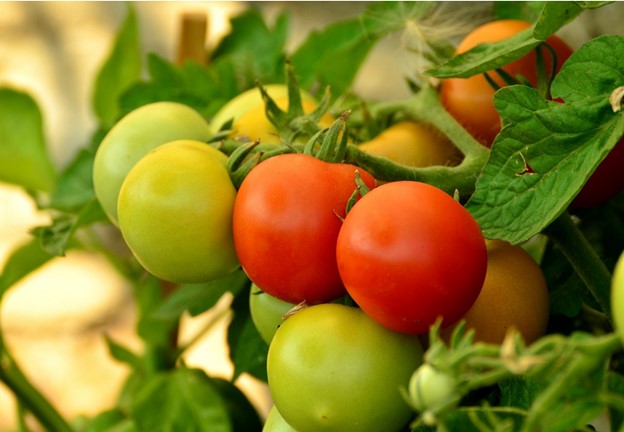
A closely related condition is yellow shoulder disorder. Instead of remaining fully green, the upper portions of the fruit become yellow or pale while the inside remains firm and under-ripe.
This disorder is commonly associated with:
- Potassium deficiency
- Temperature stress
- Poor nutrient uptake
- Certain sensitive tomato varieties
The affected areas often remain hard even after the rest of the fruit ripens.
Excess Nitrogen Fertilizer
Nitrogen helps tomato plants produce vigorous leafy growth. However, too much nitrogen can delay fruit ripening.
When plants receive excessive nitrogen:
- More energy goes into leaves and stems
- Fruit maturity slows down
- Tomatoes may develop uneven coloration
- Internal ripening can lag behind external color changes
Balanced fertilization is essential for producing uniformly ripened fruit.
Insufficient Sunlight
Tomatoes need plenty of sunlight for proper growth and ripening.
If plants are heavily shaded by:
- Dense foliage
- Nearby trees
- Buildings
- Overcrowded garden beds
the fruits may not ripen uniformly. The outer skin may eventually color up, but the interior can remain partially green.
Early Harvesting
Sometimes tomatoes are picked before they are fully mature.
Although mature green tomatoes can continue ripening after harvest, internal development may not always keep pace with changes in external color. As a result, the fruit may look red on the outside while still showing green flesh inside.
Allowing tomatoes to remain on the vine until they reach full maturity often improves internal ripening.
Variety Characteristics
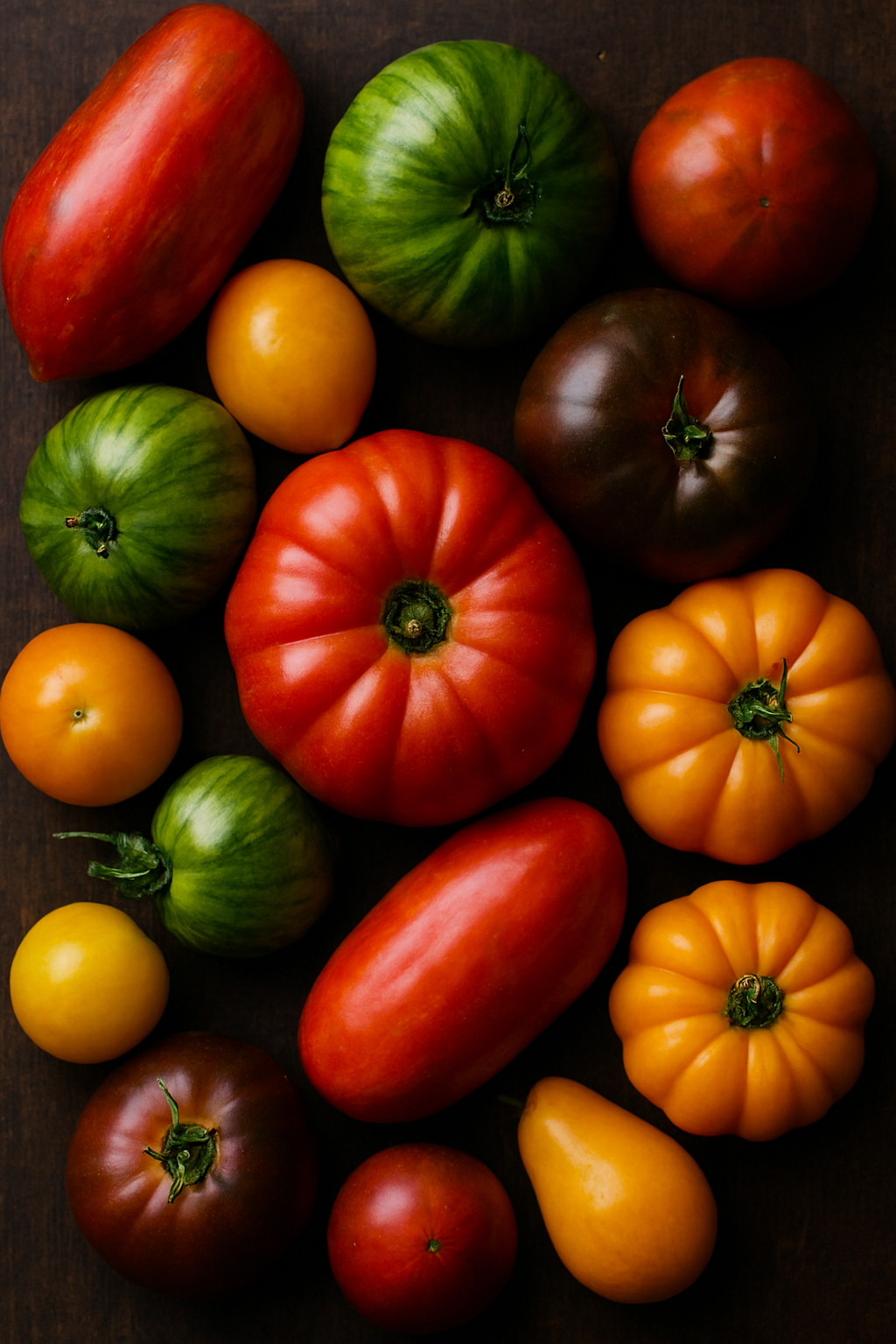
Not all green interiors are a sign of a problem.
Some tomato varieties naturally retain green pigmentation around:
- Seed cavities
- Core tissue
- Stem ends
Heirloom varieties and certain specialty tomatoes may display this trait even when perfectly ripe. If the fruit tastes good and has a normal texture, the green coloration may simply be part of the variety’s genetics.
Are Tomatoes with Green Flesh Safe to Eat?
In most cases, yes.
A tomato that is mostly ripe but contains a few green sections is generally safe to consume. The green areas may be firmer and less flavorful, but they do not usually indicate spoilage.
However, you may want to avoid eating the fruit if:
- The green tissue is extremely hard
- The tomato tastes unusually bitter
- There are signs of rot or mold
- The fruit is clearly immature
When in doubt, remove the green portions and use the ripened sections.
How to Prevent Tomatoes from Staying Green Inside
Maintain Consistent Watering
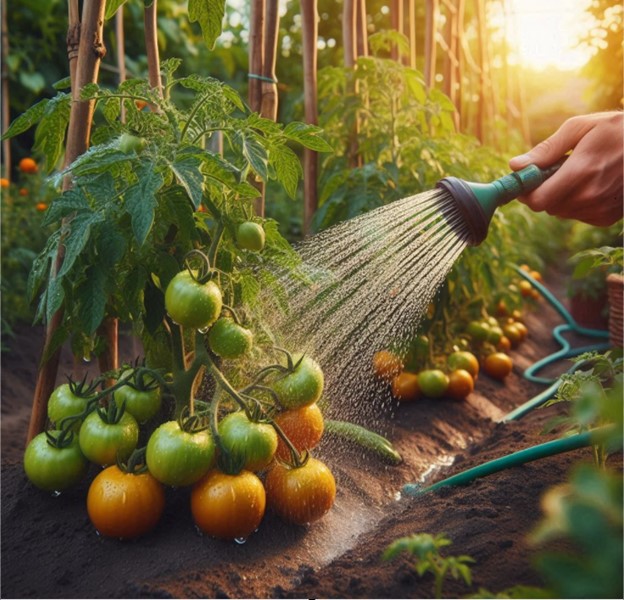
Irregular watering can stress plants and interfere with fruit development. Water deeply and consistently, especially during hot weather.
Improve Airflow and Light Exposure
Proper spacing and pruning can help sunlight reach developing fruits while reducing plant stress.
Use Balanced Fertilizer
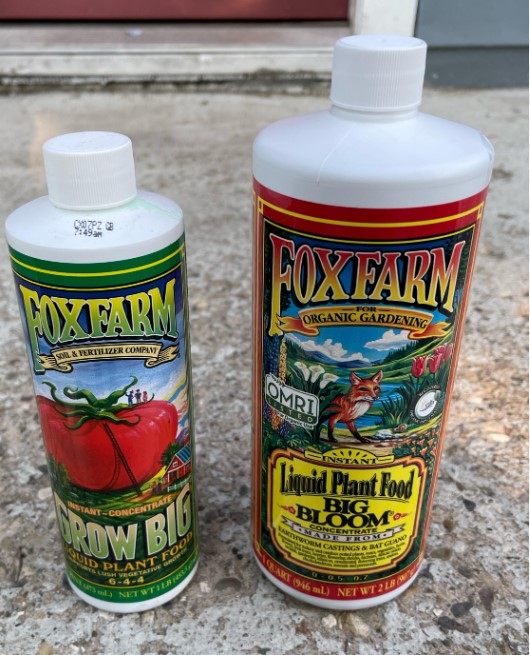
Avoid excessive nitrogen applications. Choose a fertilizer designed for fruiting vegetables that provides adequate phosphorus and potassium.
Protect Plants During Extreme Heat
During severe heat waves, shade cloth can reduce temperature stress and improve ripening quality.
Choose Resistant Varieties
Some modern tomato varieties have been bred to resist greenback and yellow shoulder disorders. These varieties often produce more uniformly ripened fruit under challenging conditions.
Can Green Tomatoes Ripen Further After Harvest?
If the green flesh results from incomplete ripening rather than a disorder, allowing the fruit to sit at room temperature for several days may improve color and flavor.
Store tomatoes:
- At room temperature
- Away from direct sunlight
- In a single layer
Avoid refrigeration until the fruit is fully ripe, as cold temperatures can interfere with flavor development.
Wrapping Up
A tomato that is ripe outside but green inside is usually the result of uneven ripening caused by heat stress, nutrient imbalances, insufficient sunlight, early harvesting, or physiological disorders such as greenback and yellow shoulder. While the fruit is often safe to eat, its flavor and texture may not be as good as a fully ripened tomato.
By providing consistent care, balanced nutrition, adequate sunlight, and protection from extreme temperatures, gardeners can greatly reduce the chances of harvesting tomatoes that look ripe on the outside but remain green on the inside.
Leave a Reply