You pick a tomato from your garden, expecting it to be beautifully red and ripe. But when you look closely, the area around the stem is still yellow or green. The rest of the fruit looks perfectly fine, so what happened?
This condition is known as yellow shoulder, and it is fairly common in homegrown tomatoes, particularly during hot weather. It can make a tomato look unevenly ripe, but that doesn’t automatically mean the fruit has gone bad.
So, can you eat tomatoes with yellow shoulders? What causes this problem, and can you prevent it from happening to the next batch? Let’s take a closer look.
Can You Eat Tomatoes with Yellow Shoulders?
Table of Contents
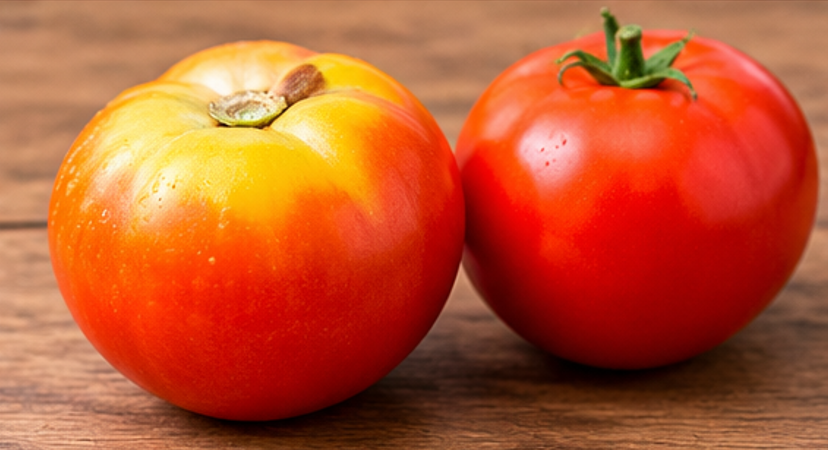
Yes, you can generally eat a tomato with yellow shoulders if the fruit is otherwise fresh and shows no signs of spoilage.
The yellow area is usually a ripening problem rather than a sign of rot or contamination. However, there’s one thing you may notice when cutting into the tomato: the flesh beneath the yellow patch can be firm, pale and less pleasant to eat.
If that portion feels tough, simply cut it away. The remaining flesh can still be used in salads, sandwiches, sauces and other dishes.
Before eating, check the entire tomato. Avoid fruit that has mould, a foul smell, leaking liquid or soft, rotting patches. Yellow shoulders alone are not a reason to throw a tomato away.
What Are Yellow Shoulders on Tomatoes?
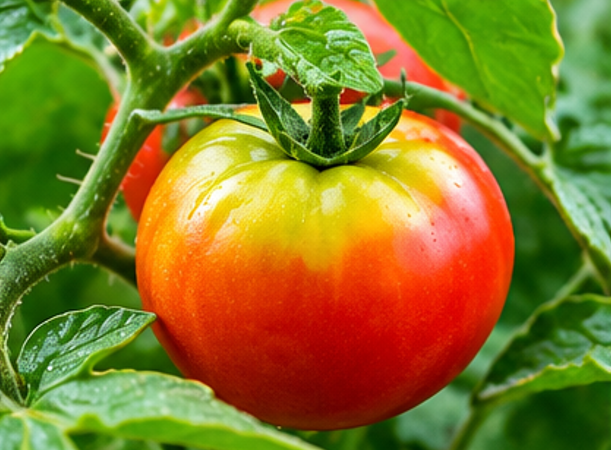
The term yellow shoulders describes the area around the stem that stays yellow or green while the rest of the tomato develops its red colour. In some tomatoes, the affected patch is small and limited to one side. In others, most of the upper portion remains yellow. You may also find that the flesh just beneath the skin is hard, pale or slightly woody.
This happens because the fruit does not develop its colour evenly as it ripens. The red pigment, called lycopene, may not develop properly in the affected tissue. One important point: yellow shoulders are not always caused by something you did wrong in the garden. Tomato variety and growing conditions can both influence how likely a fruit is to develop this problem.
What Causes Yellow Shoulders on Tomatoes?
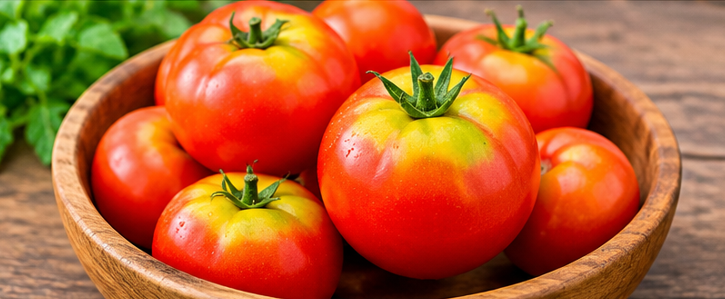
There isn’t always one clear explanation. Several growing conditions can contribute to yellow shoulders.
High Temperatures
Hot weather is one of the major factors associated with uneven tomato ripening. Tomatoes need suitable temperatures to develop their red colour. When temperatures remain very high, lycopene production can slow down or become disrupted. As a result, the area around the stem may stay yellow or green even when the lower portion turns red.
This is why gardeners often notice the problem during hot summer weather.
Potassium Imbalance
Potassium plays an important role in fruit development and ripening. When the plant cannot take up enough potassium, or when the balance of nutrients in the soil is unsuitable, uneven ripening may occur.
However, don’t rush to add potassium fertilizer just because your tomatoes have yellow shoulders. Soil conditions and other nutrients can affect potassium availability, so a soil test is a better starting point.
Too Much Nitrogen
Excessive nitrogen can contribute to poor or uneven fruit development in some growing conditions.
A tomato plant with lots of lush, dark green leaves may look healthy, but that doesn’t necessarily mean its fruit is developing properly. Overfertilizing, particularly with nitrogen-rich fertilizer, can upset the balance needed for good fruit production. Use fertilizer according to the plant’s needs rather than adding more whenever growth appears slow.
Direct Sun Exposure and Fruit Temperature
Tomatoes need sunlight to grow, but fruit exposed to intense heat can become much hotter than the surrounding air.
This can interfere with normal colour development, particularly during the later stages of ripening. A plant that has lost too many leaves may leave its fruit exposed to harsh sunlight. Maintaining healthy foliage helps protect developing tomatoes while still allowing the plant to receive adequate light.
Tomato Variety
Some tomato varieties naturally have green shoulders while they are developing. Certain varieties are also more prone to retaining green or yellow patches as they ripen.
If the same problem appears repeatedly on a particular variety, the seeds themselves may be part of the reason. Consider trying a variety described as having uniform ripening next season.
How to Prevent Yellow Shoulders on Tomatoes
You may not be able to prevent every case, especially during a particularly hot growing season. Still, a few gardening practices can reduce the chances of uneven ripening.
Choose Tomato Varieties Carefully
If yellow shoulders have been a recurring problem, try a variety known for uniform ripening. Check seed descriptions before planting, and avoid varieties that are particularly prone to green shoulders if this bothers you.
Maintain Healthy Foliage
Don’t remove too many leaves while pruning your tomato plants. Healthy foliage provides some protection to developing fruit from intense sunlight. Also keep an eye out for pests and leaf diseases that can cause premature leaf loss.
Avoid Overfertilizing
Tomatoes need balanced nutrition, not excessive fertilizer. Too much nitrogen can contribute to growing problems, while inadequate potassium may also affect fruit development.
A soil test can help you understand what your garden actually needs. Follow the recommended fertilizer rates instead of guessing.
Water Consistently
Try to keep the soil moisture reasonably consistent throughout the growing season. Water deeply when needed, and consider adding mulch around the base of the plant to help retain moisture.
Consistent watering supports healthy plant growth, although it cannot guarantee that yellow shoulders won’t develop.
Protect Plants During Extreme Heat
During prolonged hot spells, consider using suitable shade cloth to reduce excessive heat and direct exposure. Avoid stripping away foliage that naturally shades fruit clusters.
Make sure the plants still receive enough light and have good airflow.
Wrapping Up
Finding yellow shoulders on your homegrown tomatoes can be disappointing, especially after spending weeks looking after the plants. But don’t discard an otherwise healthy tomato just because the colour isn’t uniform.
Check the fruit, cut away any tough areas and use the remaining flesh if it is fresh. For your next growing season, pay attention to the varieties you plant, keep the foliage healthy and avoid unnecessary fertilizer.
Have you noticed yellow shoulders on your tomato plants? Share what your tomatoes looked like and what growing conditions you experienced. Your experience might help another gardener solve the same problem.
Leave a Reply