Last season, I remember standing in my garden, staring at my tomato seedlings and feeling a bit disappointed. They had grown tall, yes—but they were thin, weak, and slightly bent. I knew from experience what that meant – poor support, struggling plants, and a harvest that wouldn’t live up to expectations.
I almost planted tomatoes outside the usual way—straight into the soil, hoping for the best. But then I decided to try something different—a simple technique I had heard about but never actually used – planting tomatoes sideways.
Instead of digging a deep hole, I laid the seedling horizontally in a shallow trench, covering most of the stem. It felt odd at first, but within days, the plant started growing stronger than I had ever seen before.
I wasn’t fully convinced when I started—but that small decision completely changed how my tomatoes grew. If you’re curious how this method works and how to do it properly, keep reading.
Why This Unusual Trick Works
Table of Contents
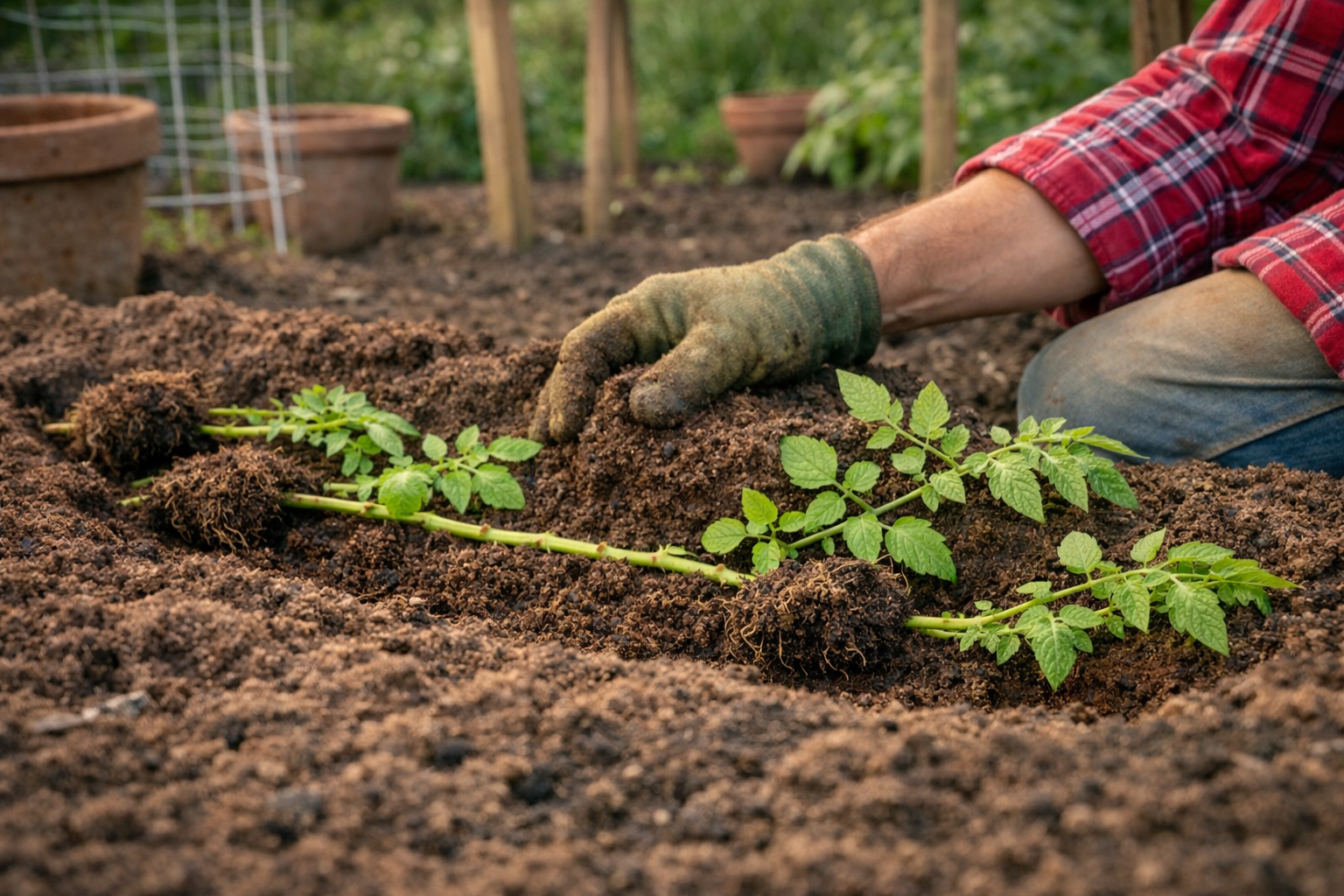
As I started learning more, the idea stopped feeling strange and began to feel… obvious. Tomato plants aren’t like most garden crops. Their stems have this quiet, powerful ability to grow roots wherever they come into contact with soil.
That means when you bury part of the stem, you’re not just planting deeper—you’re multiplying the plant’s root system. Instead of relying on a single root ball at the base, the plant develops roots all along the buried stem, creating a much stronger foundation underground.
And that changes everything.
More roots mean better absorption of water, especially during hot days when the soil dries out quickly. It means improved nutrient uptake, which directly affects growth and fruit production. But what I noticed most was stability. The plants didn’t sway or struggle the way they used to—they felt anchored, almost as if they had been built to handle whatever came their way.
Looking back, it explained a lot. My earlier plants weren’t failing because I lacked effort—they were simply under-supported beneath the surface. This method didn’t just improve them, it corrected the problem at its core.
Preparing the Seedling
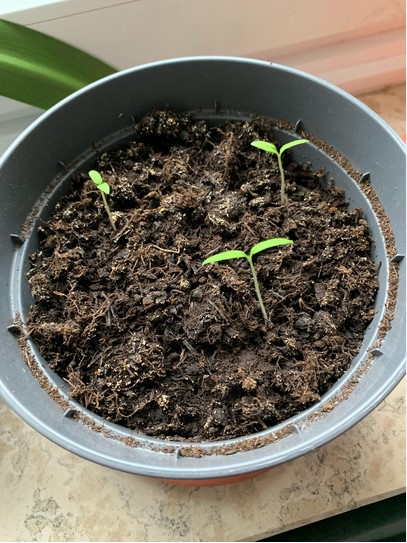
When I began, I didn’t go searching for perfect seedlings. In fact, I chose the ones I would’ve previously overlooked—the tall, slightly weak, “leggy” ones that didn’t look promising.
Instead of seeing them as a problem, I started seeing them as an opportunity. Their long stems were exactly what this method needed. Its important to master the seed germination well.
I gently removed the lower leaves along each stem, leaving only the top cluster intact. It felt a bit counterintuitive at first—like I was stripping the plant down too much—but I knew those bare sections would soon serve a new purpose underground. That moment, oddly enough, felt like preparation for transformation rather than correction.
Digging a Trench Instead of a Hole
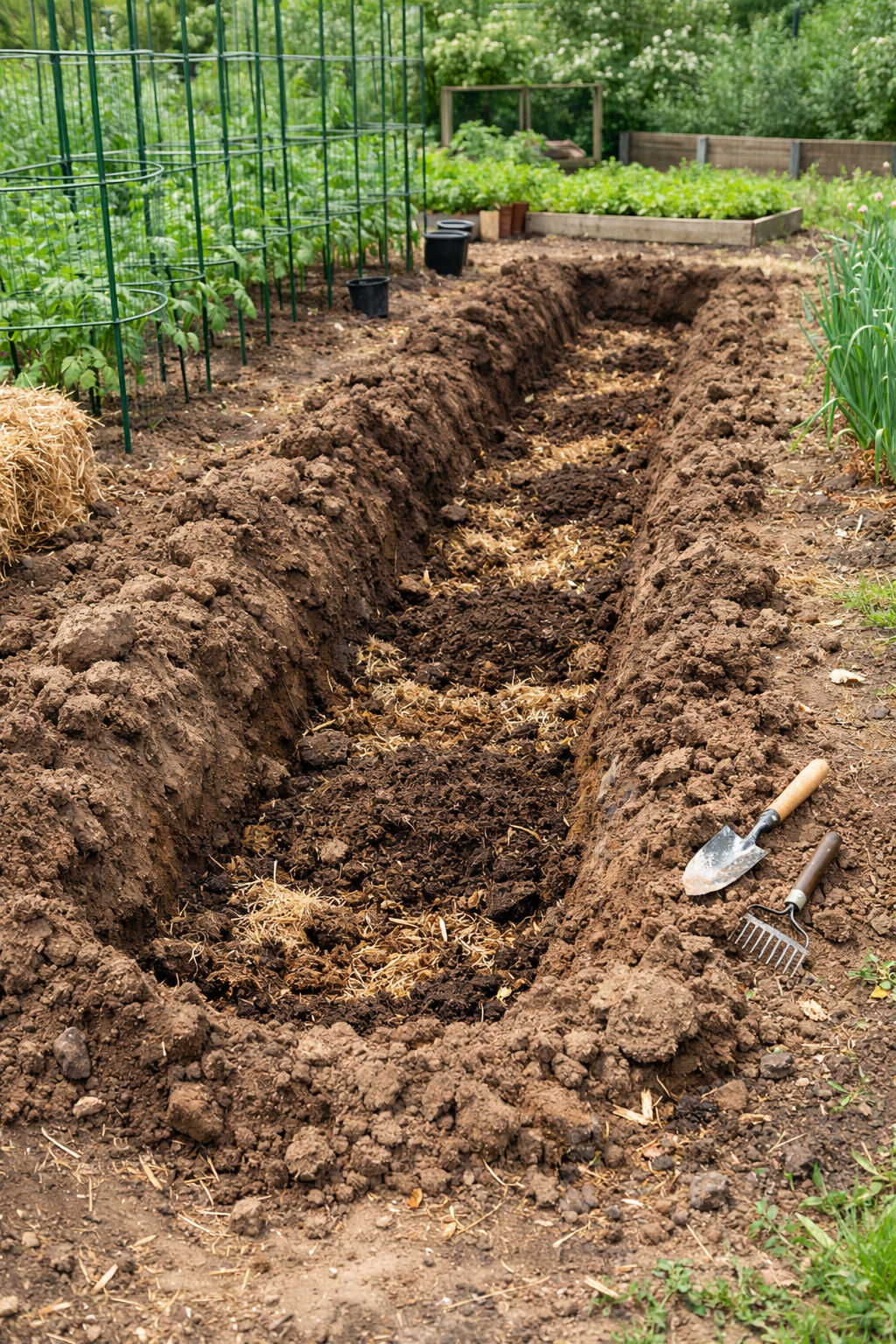
This was where I broke away from habit. For years, I had planted tomatoes the same way—dig a deep hole, place the plant upright, fill it in. But this time, I did something simpler. I dug a shallow trench, just long enough to lay the plant across it. No deep digging, no effort to force the plant downward—just a gentle adjustment in approach.
It felt almost too easy, which made me wonder why I hadn’t tried it sooner.
Laying the Plant Sideways
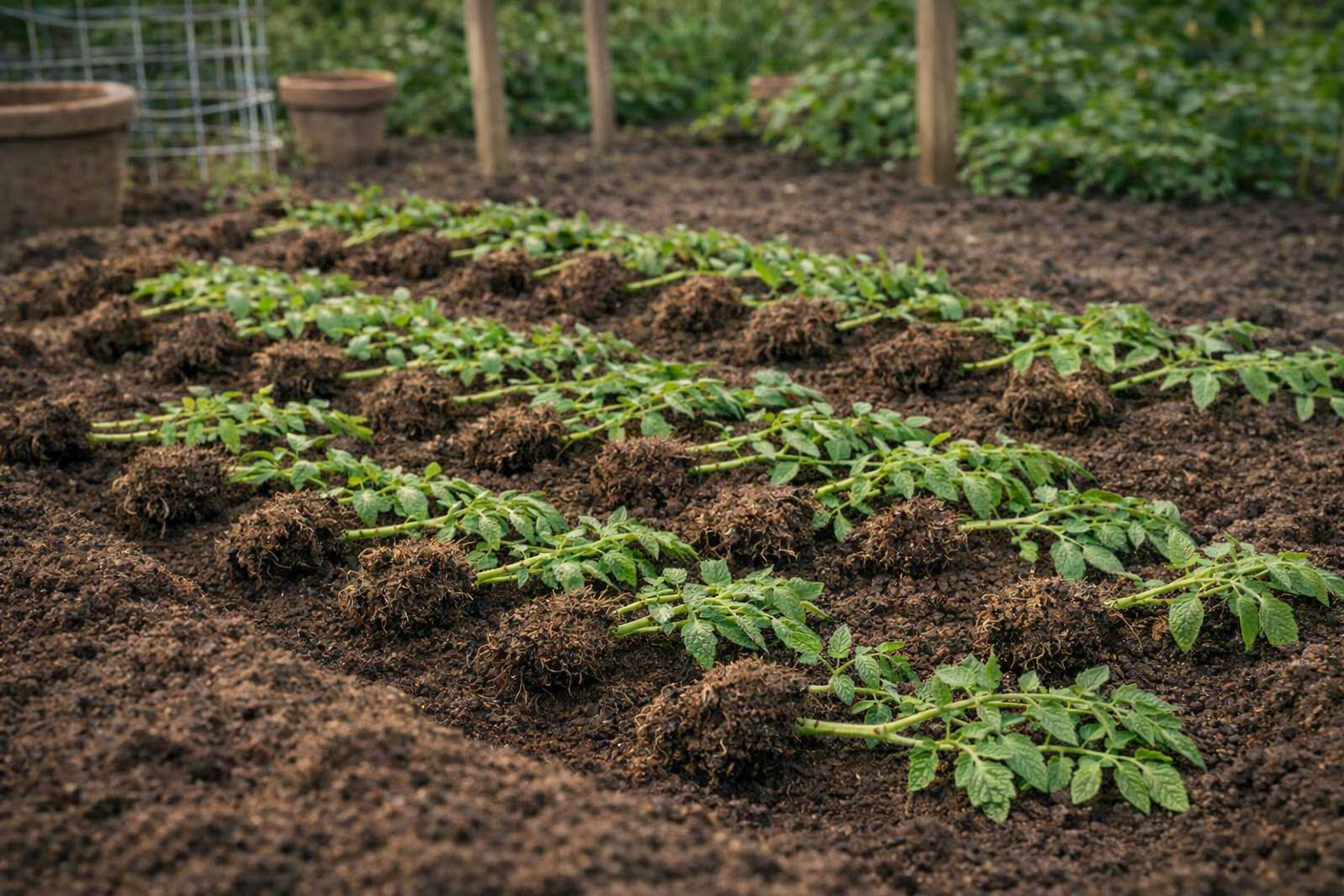
This step made me hesitate. I placed the seedling horizontally into the trench, roots at one end, stem stretched along the soil. Then I carefully lifted the top portion and bent it upward so the leaves faced the sky.
For a moment, I just looked at it. It didn’t resemble the neat, upright plants I was used to seeing. It looked… different.
But sometimes different is exactly what growth needs.
Covering the Stem
I gently covered the stem with soil, leaving only the top leaves visible above the surface. Then I pressed the soil lightly to secure it and gave it a thorough watering.
Above the ground, everything looked calm and unchanged. But I knew the real work had just begun—hidden beneath the soil, where the buried stem would soon start forming new roots.
It felt like planting with patience, trusting something I couldn’t yet see.
Supporting and Watching It Grow
The first few days were the most interesting. I kept checking on the plants, half-expecting them to struggle—but they didn’t.
Instead, they adapted.
The top slowly straightened toward the sun, and the plant began to look more confident, more stable. Within a week, the difference was already visible.
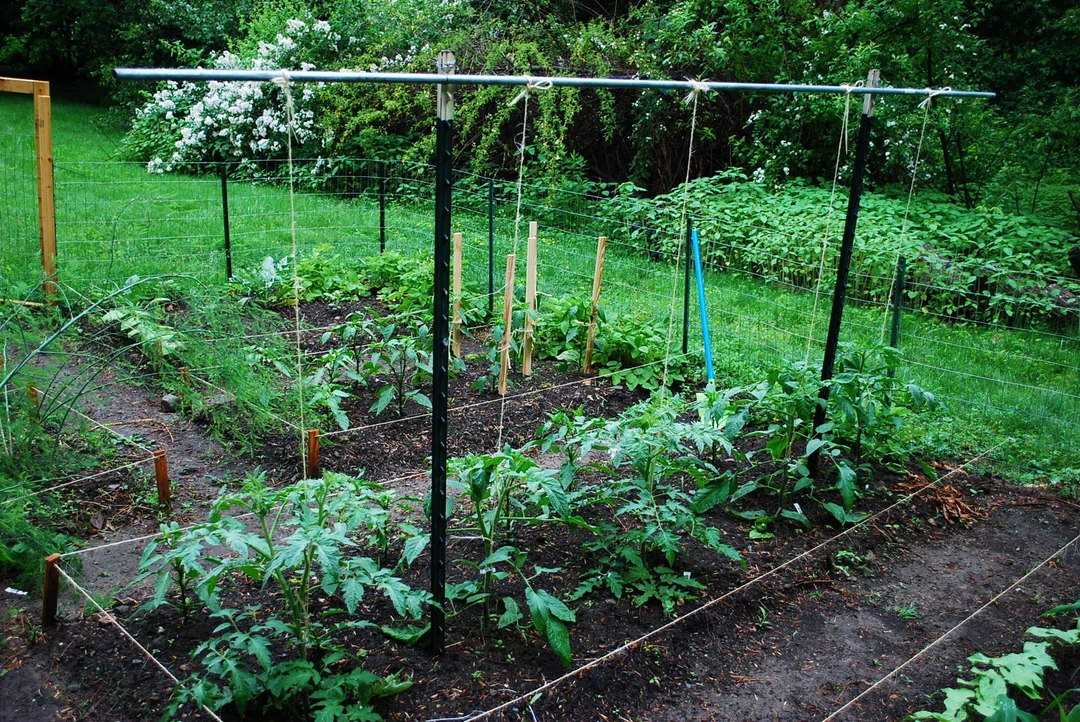
I added stakes early, not because the plant was weak, but to guide its upward growth. A layer of mulch helped retain moisture, and consistent watering kept the soil conditions steady.
Then came the real payoff. Weeks later, the plants were noticeably stronger than any I had grown before. The stems thickened, the leaves looked healthier, and even during windy days, the plants held their ground without effort.
When the fruits started forming, something clicked—the plants didn’t bend or collapse under the weight. They carried it with ease. That’s when I realized this wasn’t just a small improvement. It was a complete shift in how the plant developed from the ground up.
Wrapping Up
That one small change—planting tomatoes sideways—completely transformed my results. What started as a simple experiment became a method I now use every season without hesitation. It didn’t require special tools, expensive inputs, or extra effort. Just a different way of thinking.
And that’s the part that stayed with me.
In gardening, as in many things, better results don’t always come from doing more. Sometimes, they come from understanding the plant better—and being willing to do things a little differently.
Leave a Reply