Tomatoes are among the most widely grown vegetables in home gardens, and their fruits often spark curiosity. While most gardeners expect tomato seeds to be pale yellow, cream-colored, or light tan, occasionally a tomato is cut open to reveal black or dark-colored seeds. This unexpected sight can raise questions about the fruit’s health, ripeness, and safety.
If you’ve ever wondered why your tomato seeds are black, the answer isn’t always straightforward. Black tomato seeds can result from natural ripening processes, genetic traits, environmental conditions, aging, disease, or even seed deterioration inside the fruit. Understanding the underlying causes can help gardeners determine whether their tomatoes are safe to eat and whether the seeds can still be used for planting.
What Color Should Healthy Tomato Seeds Be?
Table of Contents
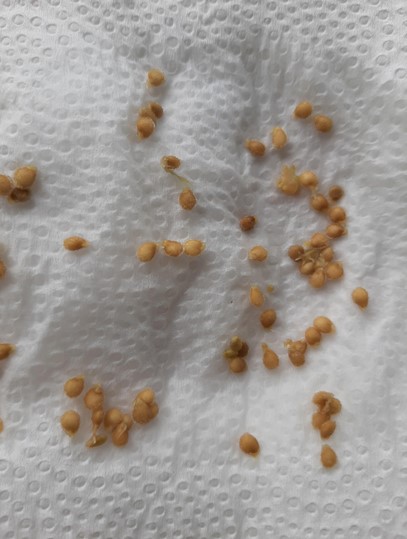
Healthy tomato seeds are typically:
- Light beige
- Cream-colored
- Pale yellow
- Light tan
These seeds are usually surrounded by a gel-like coating that protects them during development. In a healthy ripe tomato, the seeds remain relatively light in color even as the fruit itself turns red, yellow, orange, purple, or black.
When seeds appear dark brown or black, it often indicates that something has changed during the seed maturation process.
Natural Seed Maturity Can Cause Darkening
One of the most common reasons tomato seeds become darker is simply maturity.
As seeds develop inside the fruit, they undergo physiological changes, including:
- Hardening of the seed coat
- Increased nutrient storage
- Development of protective pigments
- Dry matter accumulation
In some overripe tomatoes, seeds may naturally deepen in color from pale tan to dark brown or nearly black. This is especially common when tomatoes remain on the vine longer than usual.
Signs of Naturally Mature Seeds
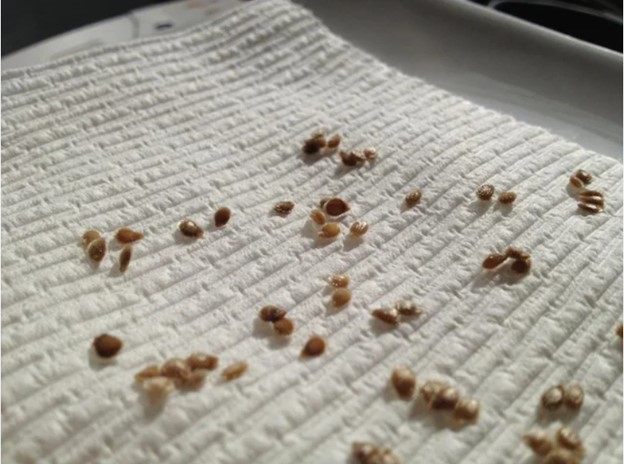
If the dark seeds are caused by maturity, you’ll usually notice:
- Firm seeds
- No foul smell
- Healthy-looking fruit flesh
- No mold growth
- Normal tomato texture
In these cases, the seeds are often perfectly viable for saving and planting.
Overripe Tomatoes and Black Seeds
Tomatoes that stay on the plant too long can become overripe.
During this stage:
- The fruit softens significantly.
- Sugars continue accumulating.
- Seed coats become tougher.
- Pigments may darken.
The longer seeds remain enclosed within a ripe tomato, the greater the chance they will develop darker appearances. Some gardeners are surprised to find almost black seeds inside fruits that are otherwise edible. In many instances, this is entirely normal and not a sign of disease.
Internal Seed Sprouting May Darken Seeds
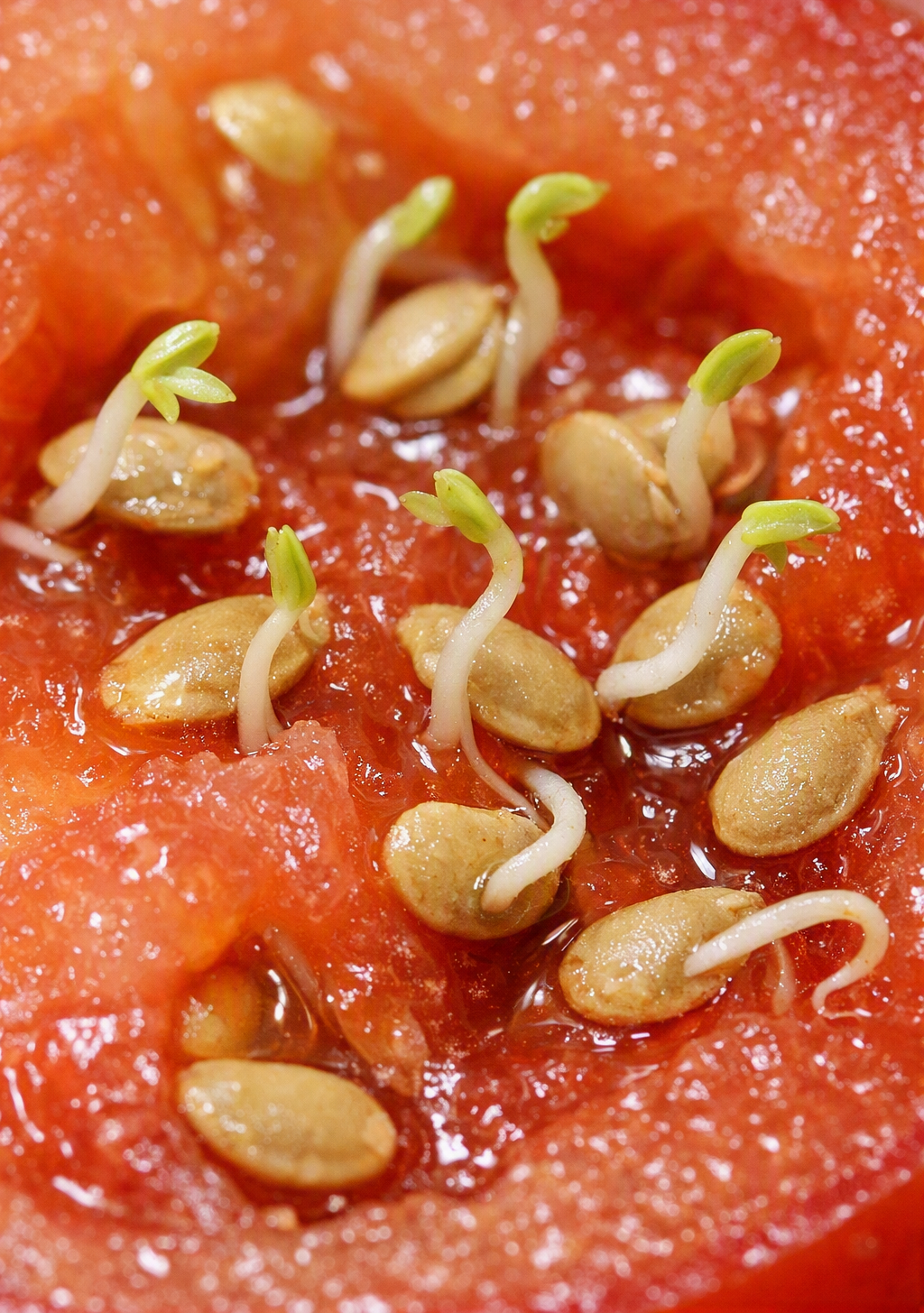
A phenomenon known as vivipary occurs when seeds begin germinating inside the tomato before the fruit is harvested.
This happens when:
- Conditions are warm and humid.
- The fruit becomes extremely ripe.
- Natural germination inhibitors break down.
Although sprouted seeds often produce white shoots, older partially germinated seeds can sometimes appear darker due to changes in seed tissues and moisture levels.
Certain Tomato Varieties Naturally Produce Darker Seeds
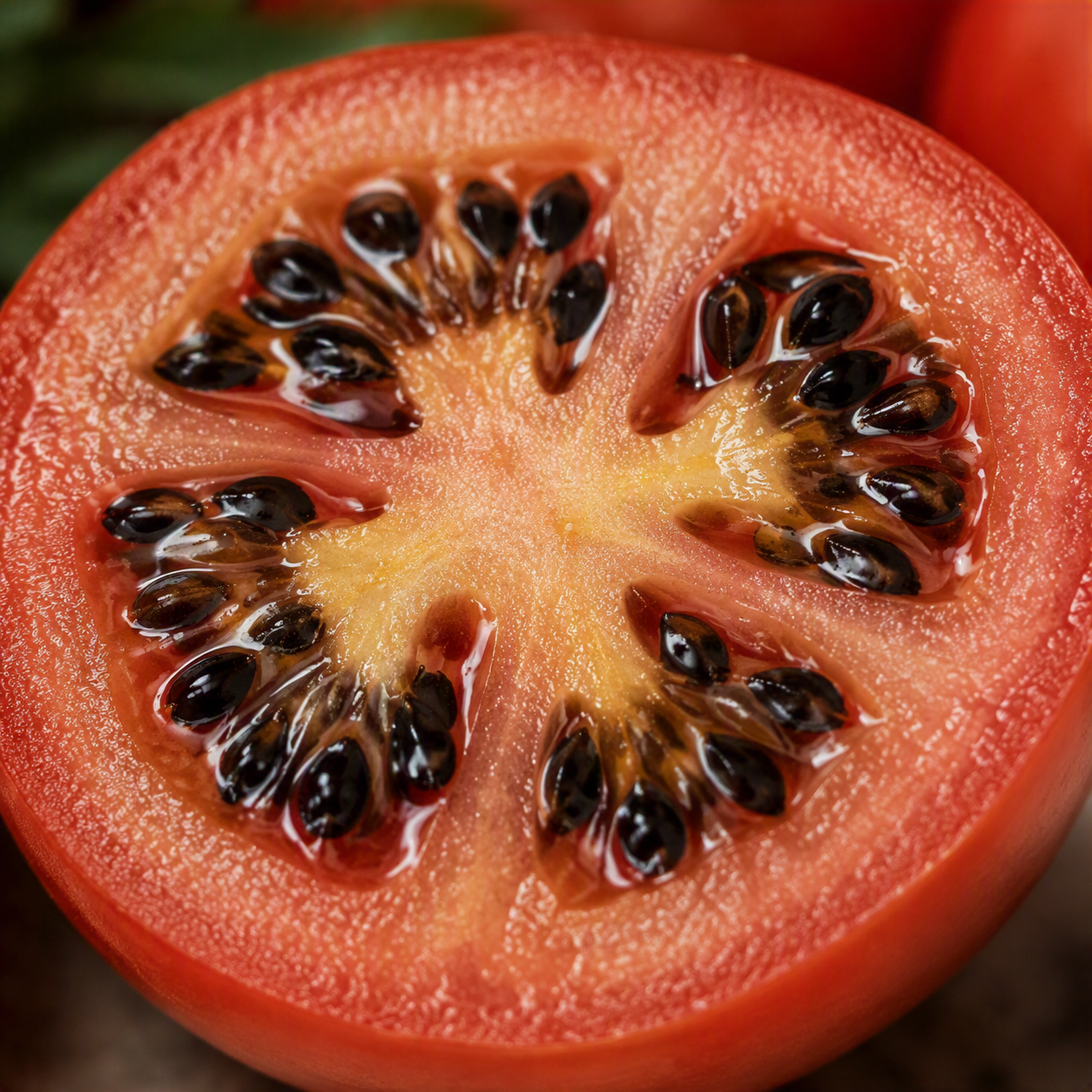
Genetics also play an important role. Some heirloom and specialty tomatoes may naturally produce seeds that appear:
- Dark tan
- Brown
- Chocolate-colored
- Nearly black
This is more common in varieties with darker fruit pigmentation, such as:
- Black Krim
- Cherokee Purple
- Black Prince
- Paul Robeson
The seed color itself is not always connected to fruit color, but genetic differences can influence seed coat pigmentation. Therefore, if you’re growing dark-colored heirloom varieties, blackish seeds may simply be characteristic of the cultivar.
Fermentation Inside the Fruit
Tomatoes contain significant moisture and sugars. When a fruit becomes damaged, cracked, or overly mature, fermentation can begin internally.
During fermentation:
- Microorganisms consume sugars.
- Acids are produced.
- Seeds may darken.
- Internal tissues soften faster.
You may notice:
- Sour smell
- Excessive softness
- Watery cavities
- Darkened seeds
If fermentation is mild, the tomato may still be salvageable for seed saving. However, severely fermented fruits should generally be discarded.
Fungal Infections and Black Seeds
Sometimes black tomato seeds indicate disease. Certain fungal pathogens can affect fruit tissues and seed development. Common warning signs include:
- Blackened seeds
- Mold growth
- Dark streaks inside fruit
- Rotting flesh
- Unpleasant odor
Fungi may invade through:
- Cracks in the fruit
- Insect damage
- Blossom-end openings
- Harvest wounds
When seeds turn black due to fungal infection, they are often unsuitable for planting because pathogens may already be present.
How to Identify Disease-Related Black Seeds
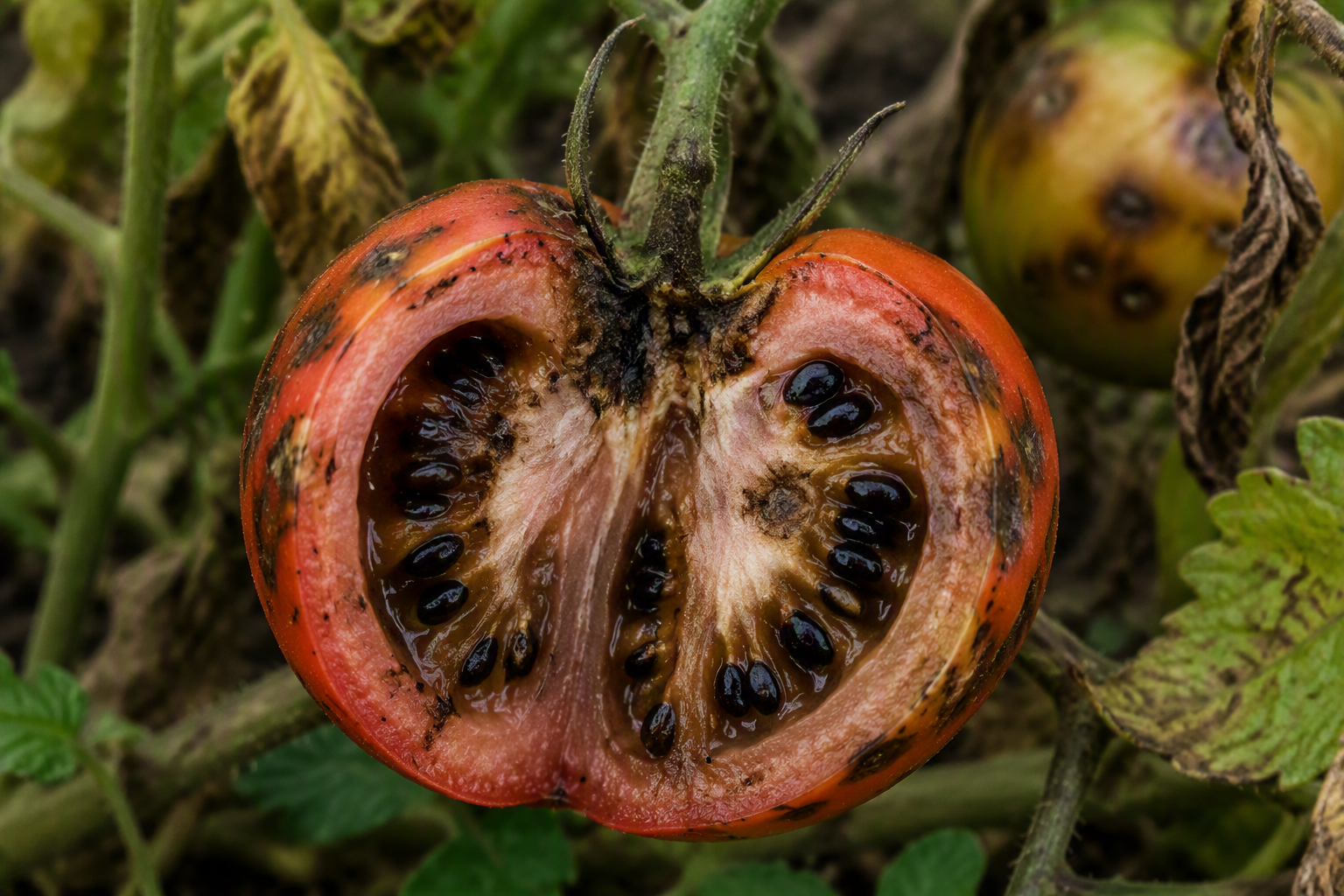
Look for these additional symptoms:
- Healthy Seeds Disease-Affected Seeds
- Firm texture Soft or shriveled
- No odor Sour or rotten smell
- Clean fruit flesh Discolored flesh
- No mold Visible mold growth
- Good germination Poor viability
If multiple symptoms occur together, disease is the more likely explanation.
Seed Death and Deterioration
Seeds are living structures. If conditions become unfavorable inside the fruit, seeds may die before harvest.
Factors include:
- Extreme heat
- Excess moisture
- Aging fruit
- Nutrient issues
As seeds deteriorate, their protective coats may become:
- Dark brown
- Black
- Wrinkled
- Fragile
Dead seeds generally fail germination tests and should not be saved for future planting.
Environmental Stress Can Affect Seed Color
Tomato plants exposed to stress may produce abnormal seeds. Common stress factors include:
Heat Stress
High temperatures can alter seed development. Prolonged heat may:
- Damage seed tissues
- Affect pigmentation
- Reduce viability
- Water Stress
Irregular watering can interfere with normal fruit and seed formation. This sometimes results in:
- Uneven maturation
- Seed discoloration
- Reduced seed quality
- Nutrient Imbalances
Deficiencies in essential nutrients can influence seed development. Insufficient levels of:
- Potassium
- Calcium
- Phosphorus
may contribute to poor seed formation and unusual coloration.
Can You Eat Tomatoes With Black Seeds?
In many cases, yes. Tomatoes with black seeds are generally safe to eat if:
- The fruit smells normal.
- There is no mold.
- The flesh is not rotten.
- The tomato taste is normal.
However, discard the fruit if you observe:
- Foul odor
- Extensive discoloration
- Mushy flesh
- Visible fungal growth
- Signs of decay or black spots on tomatoes
When in doubt, it is better to err on the side of caution.
Can Black Tomato Seeds Be Planted?
Black seeds can sometimes remain viable. To determine whether they can be planted, perform a Germination Test. Here’s how to do so:
- Place several seeds on a damp paper towel.
- Fold the towel.
- Put it in a plastic bag.
- Keep it warm.
- Check after 5 to 10 days.
If most seeds sprout, they are still viable regardless of their dark appearance.
If there is little or no germination, the seeds have likely deteriorated.
How to Prevent Unusual Seed Darkening
To reduce the likelihood of black tomato seeds:
Harvest at the Right Time
Pick tomatoes when fully ripe but before they become overripe.
Water Consistently
Maintain even moisture levels throughout the growing season.
Improve Air Circulation
Good airflow reduces fungal problems.
Remove Diseased Fruits
Discard infected tomatoes promptly to limit pathogen spread.
Avoid Leaving Fruits on the Vine Too Long
Excessively mature fruits are more likely to develop darkened seeds.
Final Thoughts
Black tomato seeds can occur for several reasons, ranging from perfectly normal seed maturity to disease, fermentation, or seed deterioration. In many cases, especially in overripe tomatoes or certain heirloom varieties, dark seeds are harmless and simply reflect advanced seed development. However, when black seeds are accompanied by foul odors, mold, or rotting flesh, disease or decay may be responsible.
The best approach is to examine the entire fruit rather than focusing solely on seed color. Healthy-smelling tomatoes with firm flesh are usually safe, while signs of spoilage should never be ignored.
Leave a Reply